Edexcel Jan 2014 (IAL) Paper 5 Q22

Answers available below

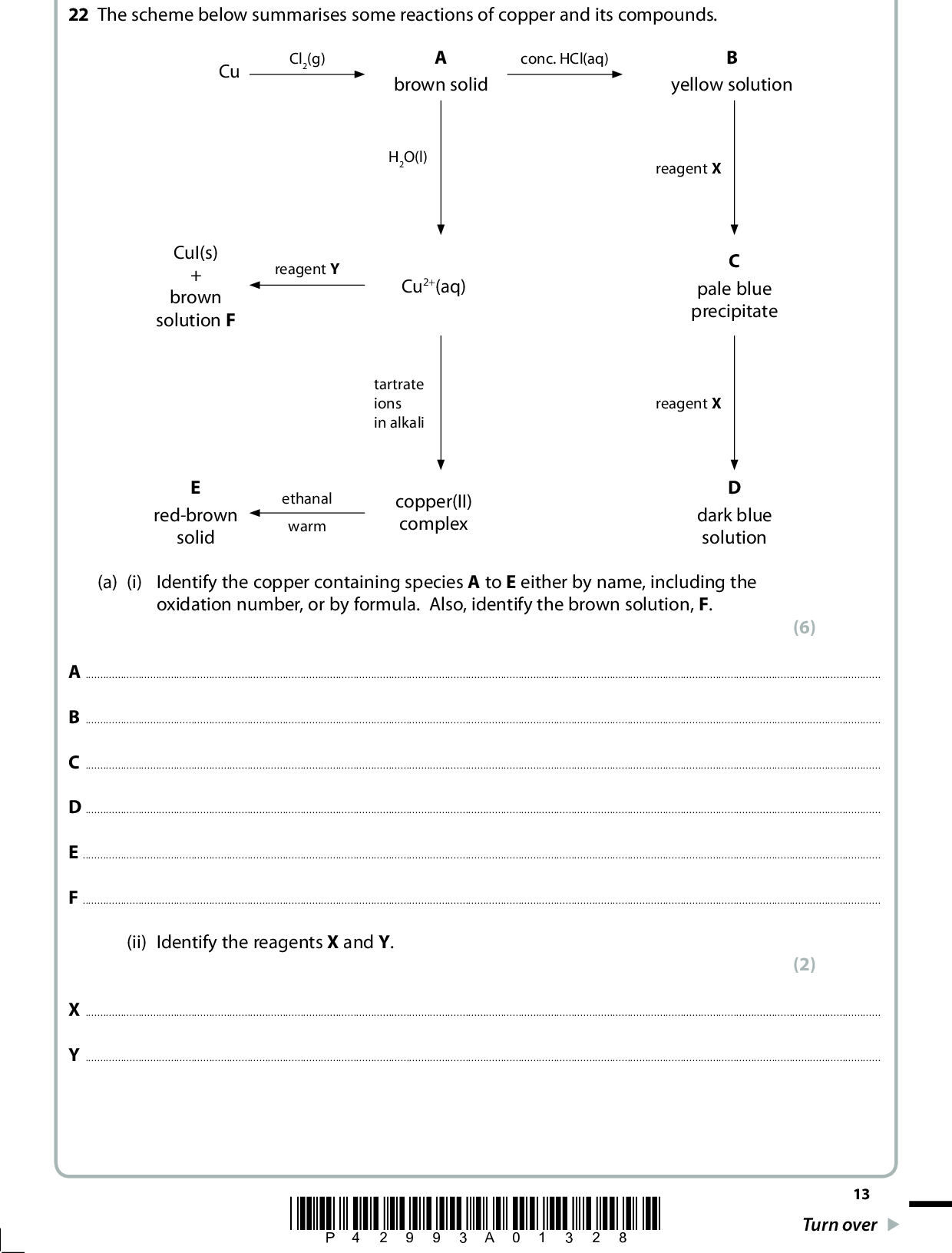
22 The scheme below summarises some reactions of copper and its compounds. Cu Cl2(g) conc. HCl(aq) brown solid yellow solution H2O(l) reagent X CuI(s) brown solution F reagent Y Cu2+(aq) tartrate ions in alkali red-brown solid ethanal warm copper(II) complex pale blue precipitate reagent X dark blue solution (a) (i) Identify the copper containing species A to E either by name, including the oxidation number, or by formula. Also, identify the brown solution, F. (6) ABCDEF(ii) Identify the reagents X and Y. (2) XY*P42993A01328* 13 Turn over<br />
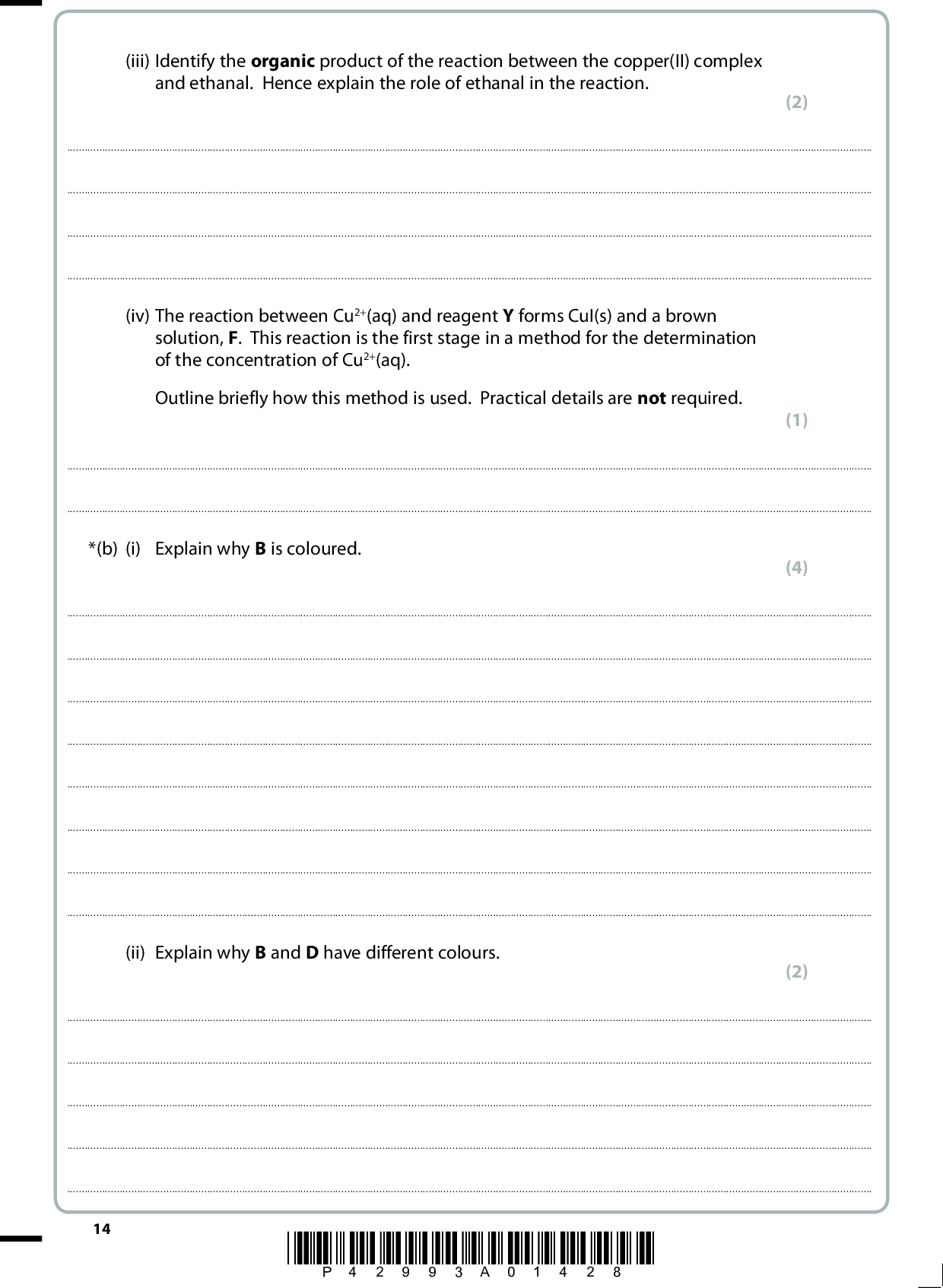
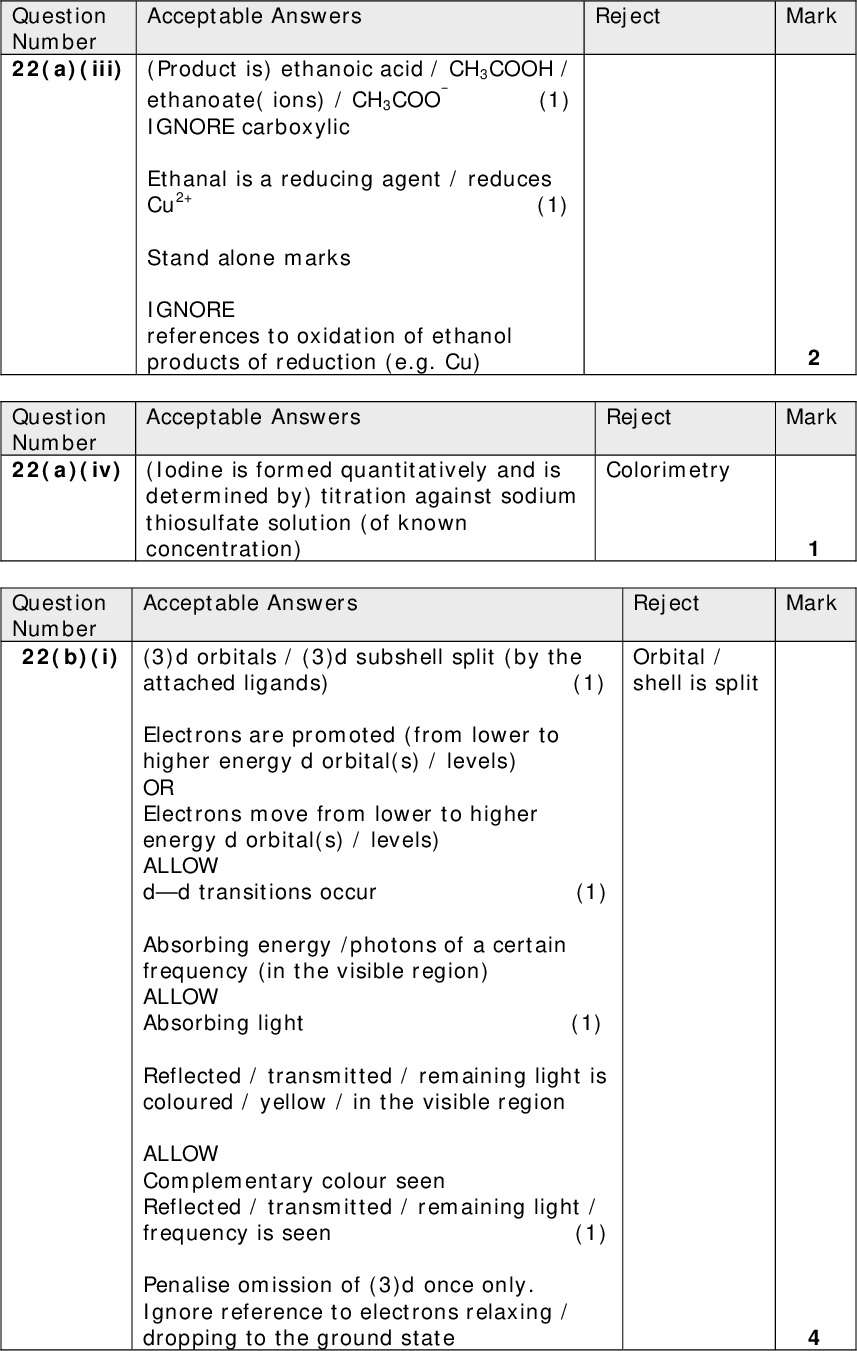
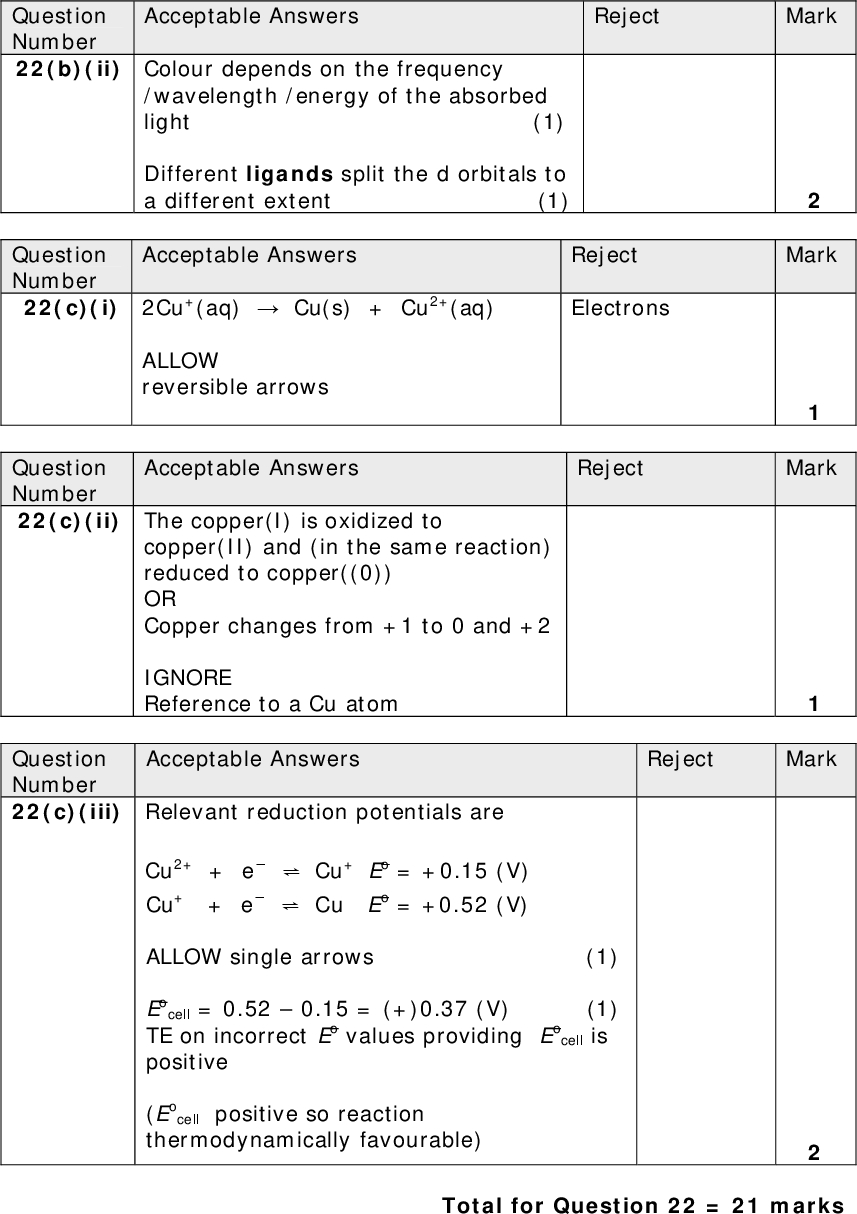
 (iii) Identify the organic product of the reaction between the copper(II) complex and ethanal. Hence explain the role of ethanal in the reaction. (2)(iv) The reaction between Cu2+(aq) and reagent Y forms CuI(s) and a brown solution, F. This reaction is the first stage in a method for the determination of the concentration of Cu2+(aq). Outline briefly how this method is used. Practical details are not required. (1)*(b) (i) Explain why B is coloured. (4)(ii) Explain why B and D have different colours. (2)14 *P42993A01428*<br />
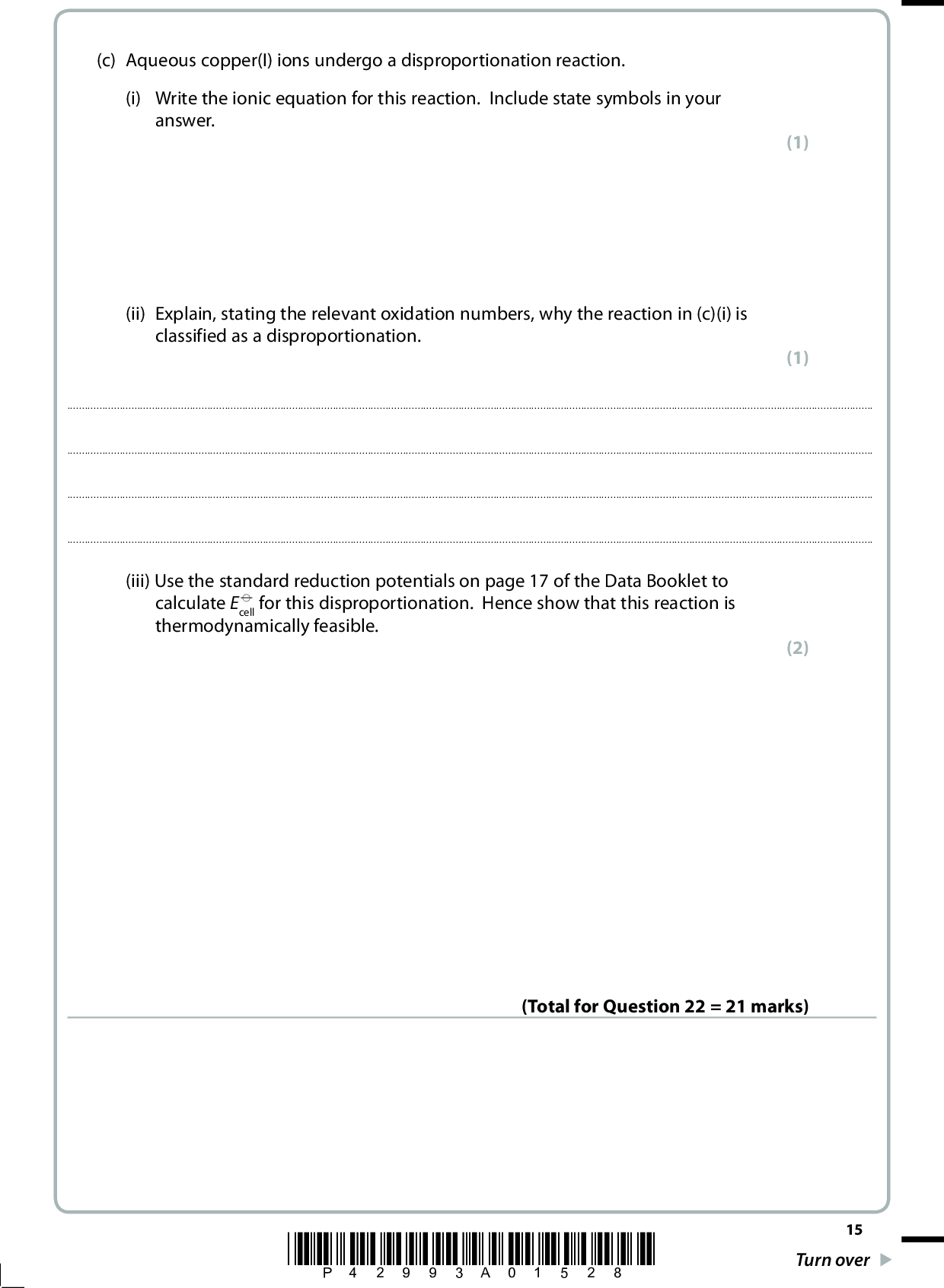
 (c) Aqueous copper(I) ions undergo a disproportionation reaction. (i) Write the ionic equation for this reaction. Include state symbols in your answer. (ii) Explain, stating the relevant oxidation numbers, why the reaction in (c)(i) is classified as a disproportionation. (1) (1)(iii) Use the standard reduction potentials on page 17 of the Data Booklet to cell for this disproportionation. Hence show that this reaction is calculate E (cid:57) thermodynamically feasible. (2) (Total for Question 22 = 21 marks) *P42993A01528* 15 Turn over<br />

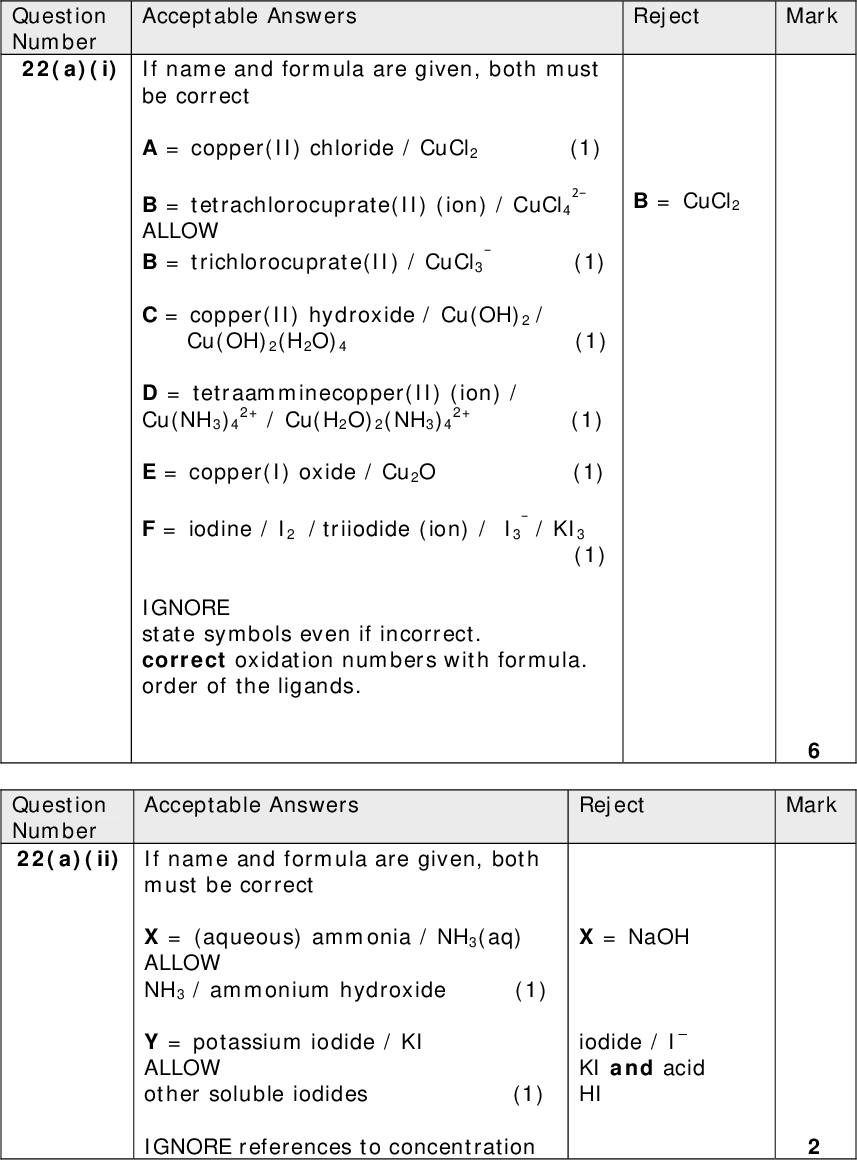
Show answer