Edexcel Jun 2014 Paper 5 Q20

Answers available below

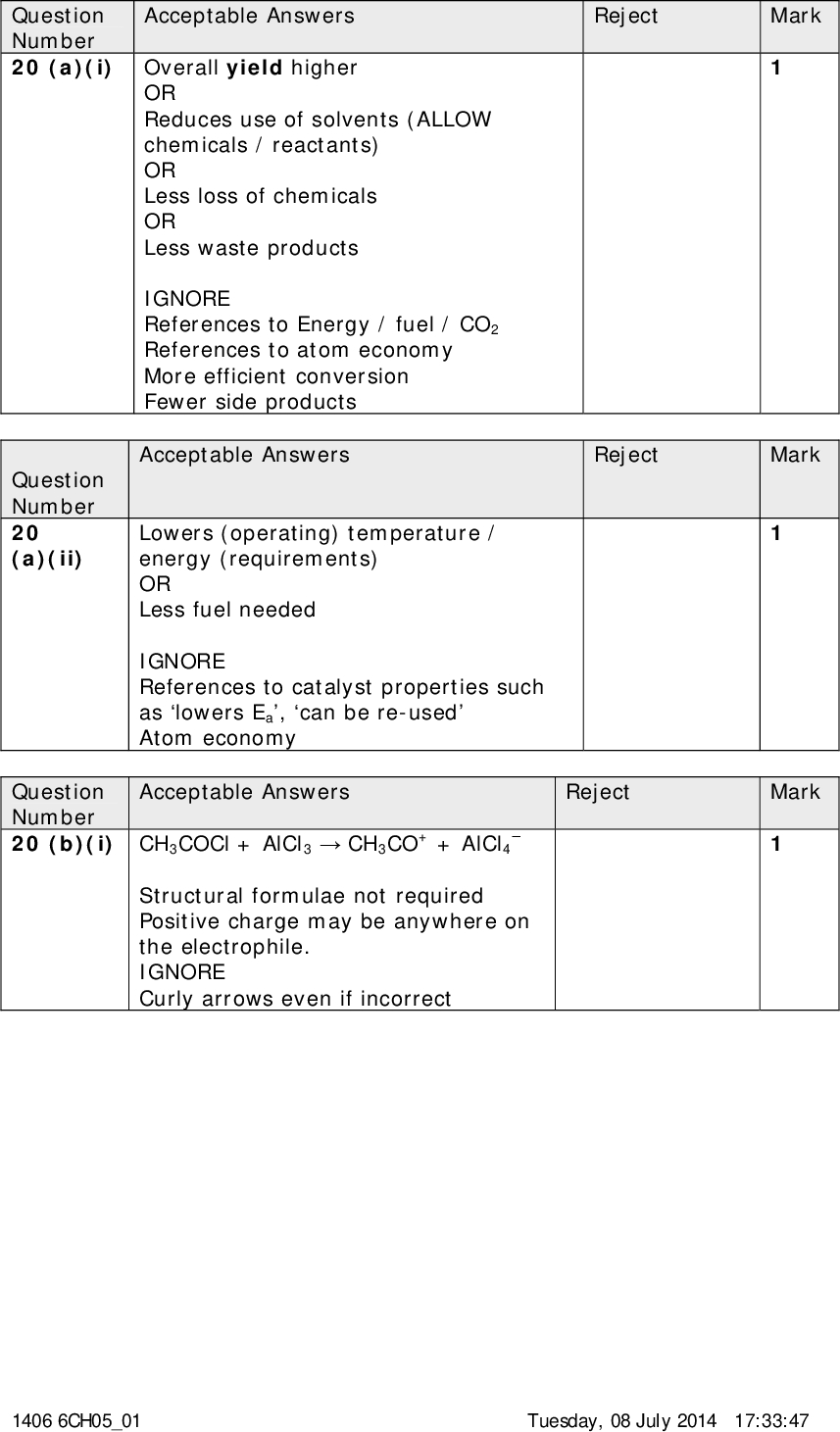
20 Ibuprofen is a nonsteroidal anti-inflammatory drug (NSAID) widely used as an analgesic (pain reliever). It was discovered in the 1960s by the Boots Group which developed a six step synthesis from 2-methylpropylbenzene. The synthesis shown below was introduced in the 1990s by the BHC Company and received a Presidential Green Chemistry Challenge award in 1997. The citation noted that the synthesis has just three steps, all of which are catalytic, and an effective atom economy of 99%. Both syntheses are carried out in solution. 2-methylpropylbenzene H2 Ni catalyst (CH3CO)2O HF catalyst CO Pd catalyst OH OH ibuprofen (a) (i) Suggest why a three step synthesis is likely to be greener than a six step process. (1)(ii) Why does the use of catalysts make processes greener (as well as faster)? (1)14 *P42973A01428*<br />
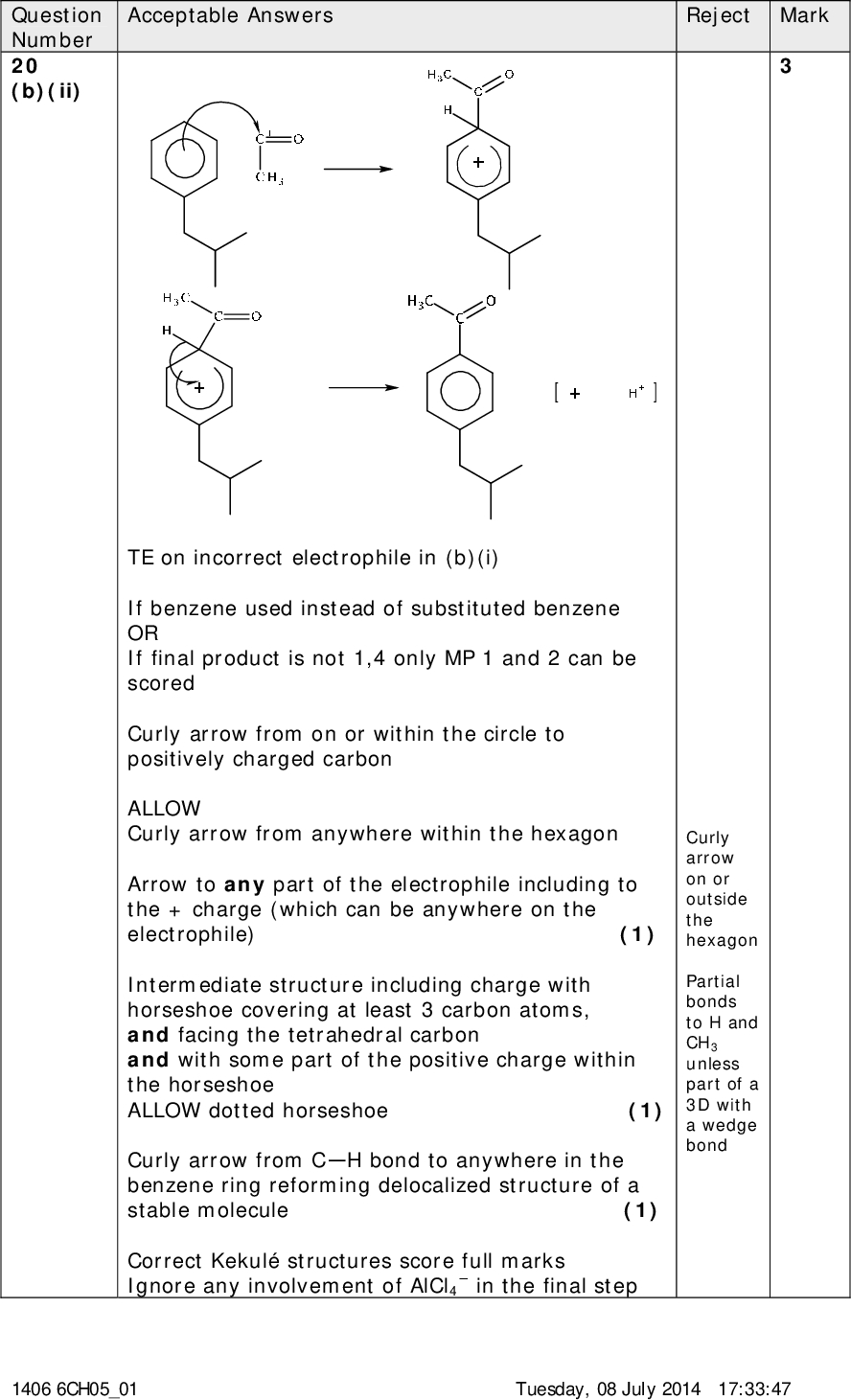
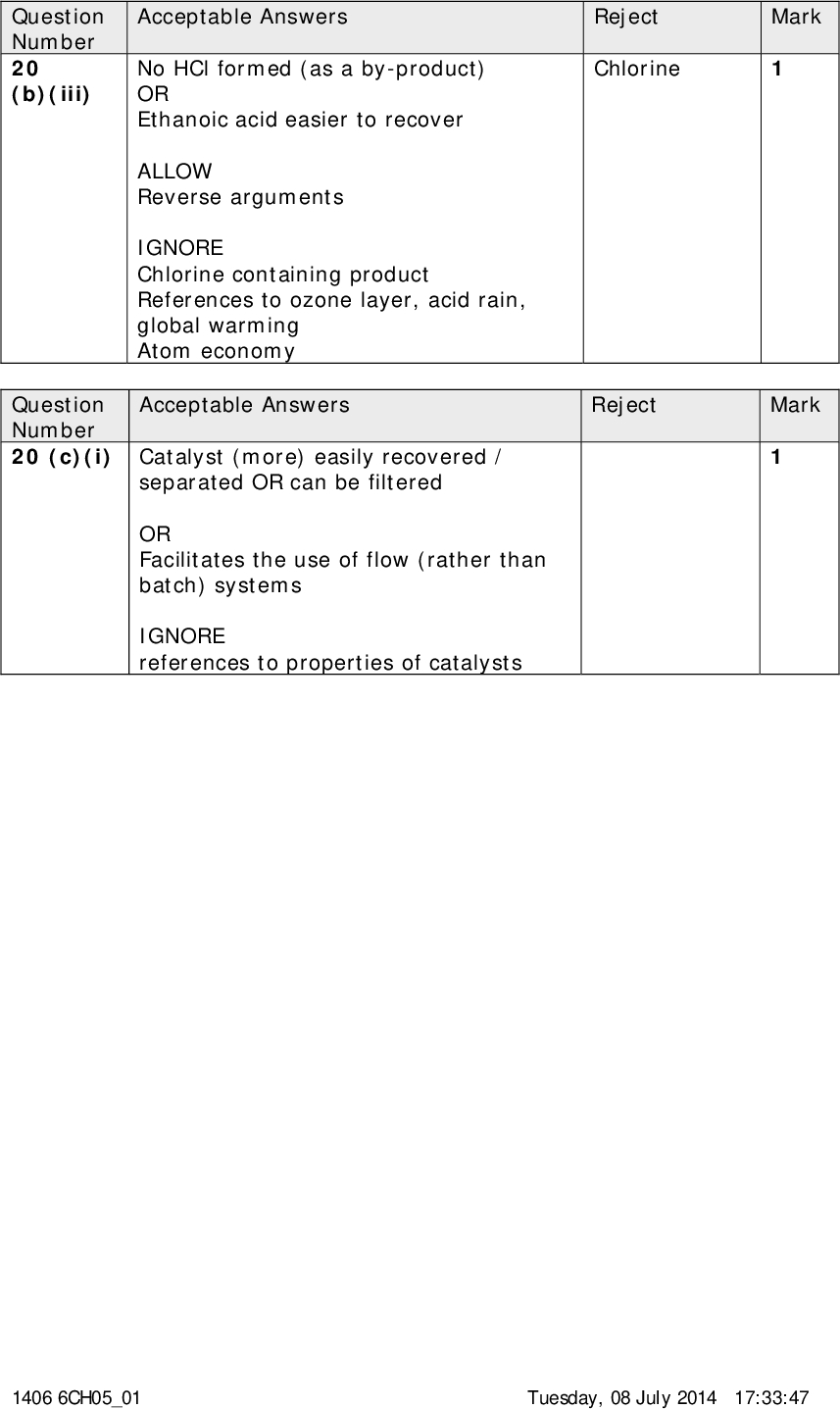
 (b) The first step of the synthesis is an electrophilic substitution which is usually carried out in a school laboratory using ethanoyl chloride and an aluminium chloride catalyst. (i) Write an equation showing the formation of the electrophile in the school experiment. (ii) Give the mechanism for the electrophilic substitution of 2-methylpropylbenzene by ethanoyl chloride, using the electrophile you have given in (b)(i). (iii) Suggest one environmental benefit of using (CH3CO)2O, rather than ethanoyl chloride, in the manufacture of ibuprofen. (1) (3) (1)*P42973A01528* 15 Turn over<br />
 (c) The final stage of the modern synthesis for ibuprofen is shown below. CO Pd catalyst OH ibuprofen (i) Suggest a benefit of using a solid catalyst in this reaction. OH (1)16 *P42973A01628*<br />
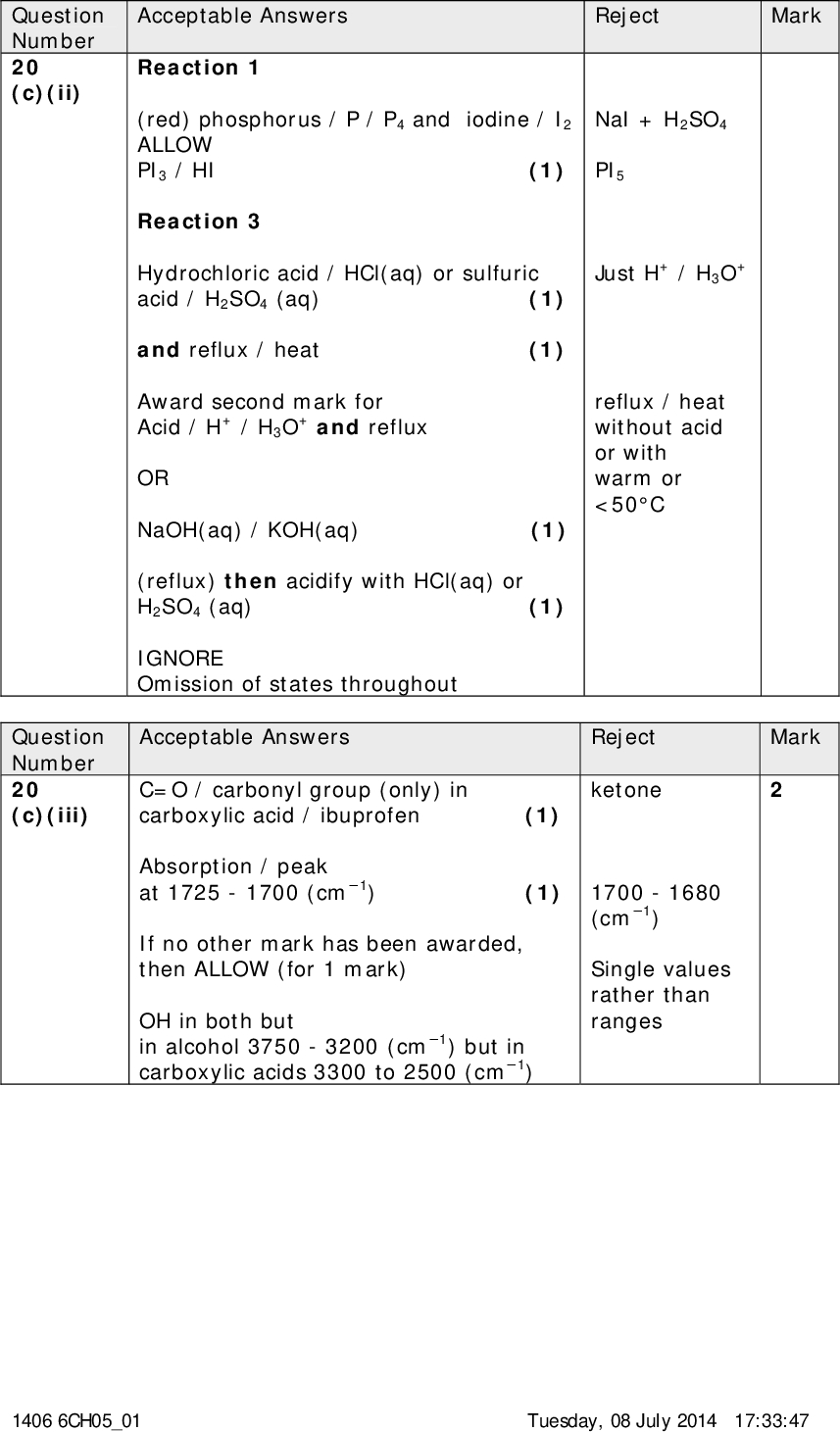
 (3) (ii) The preparation in part (c) can be carried out in a laboratory in three reactions. Reaction 1 Reaction 2 Reaction 3 OH CN CN OH Give: The reagents for Reaction 1The reagents and conditions for Reaction 3*P42973A01728* 17 Turn over<br />
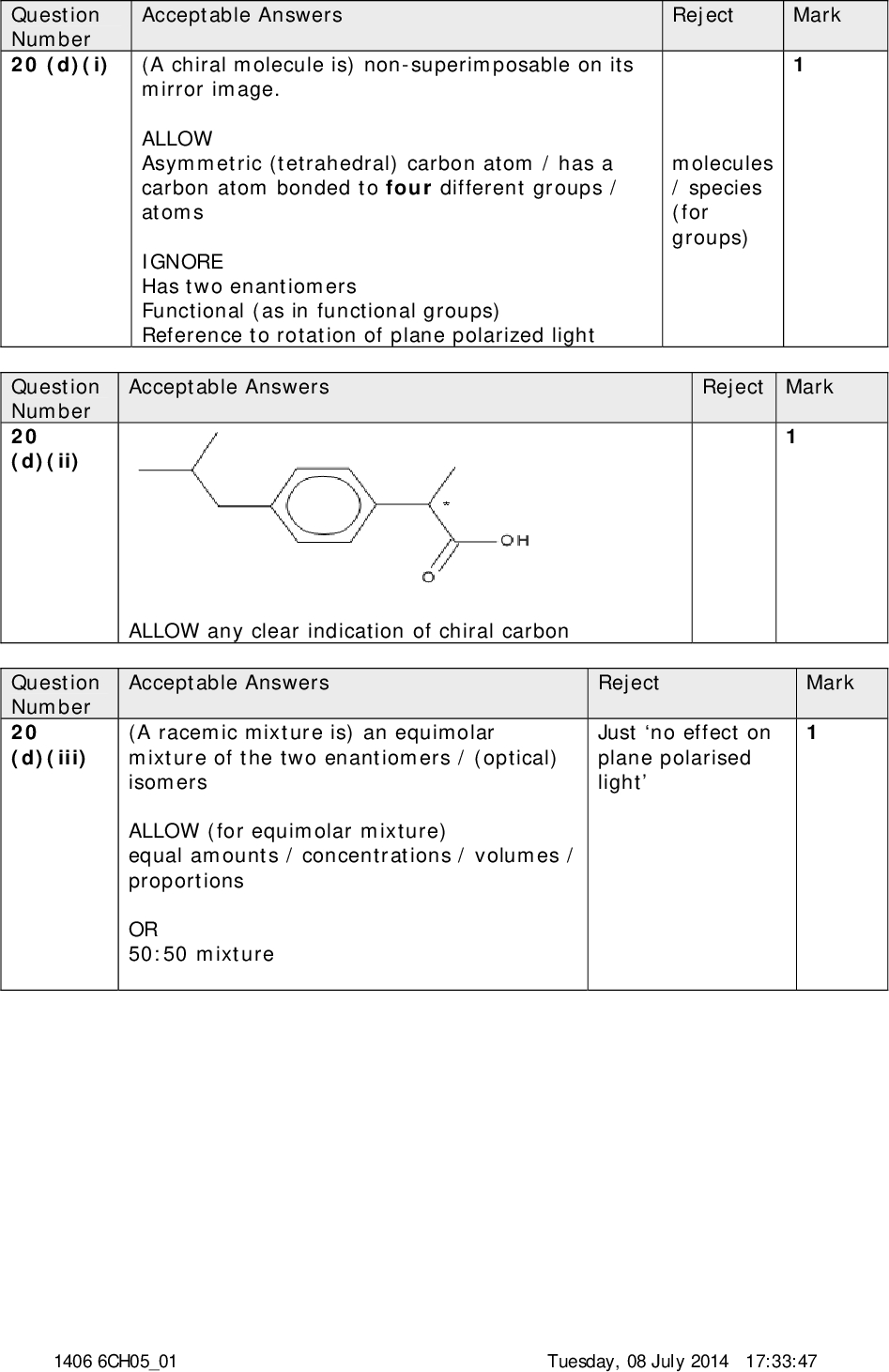
 (iii) Using your Data Booklet, explain how infrared spectroscopy can be used to distinguish between the two structures shown below. OH ibuprofen (2) OH(d) Ibuprofen is a chiral molecule and only one of its enantiomers is biologically active. However, although the synthesis produces a racemic mixture, an isomerase enzyme in the body converts the inactive enantiomer into the active enantiomer. (i) Explain the term chiral molecule. (1)(ii) Mark with an asterisk (*) the chiral centre on the structure of ibuprofen below. (1) OH 18 *P42973A01828*<br />
 (iii) Explain the term racemic mixture. (1)(iv) Suggest two benefits that arise from the isomerization of the inactive enantiomer of ibuprofen. (2)(Total for Question 20 = 18 marks) *P42973A01928* 19 Turn over<br />

Show answer