Edexcel Jun 2009 Paper 2 Q21

Answers available below

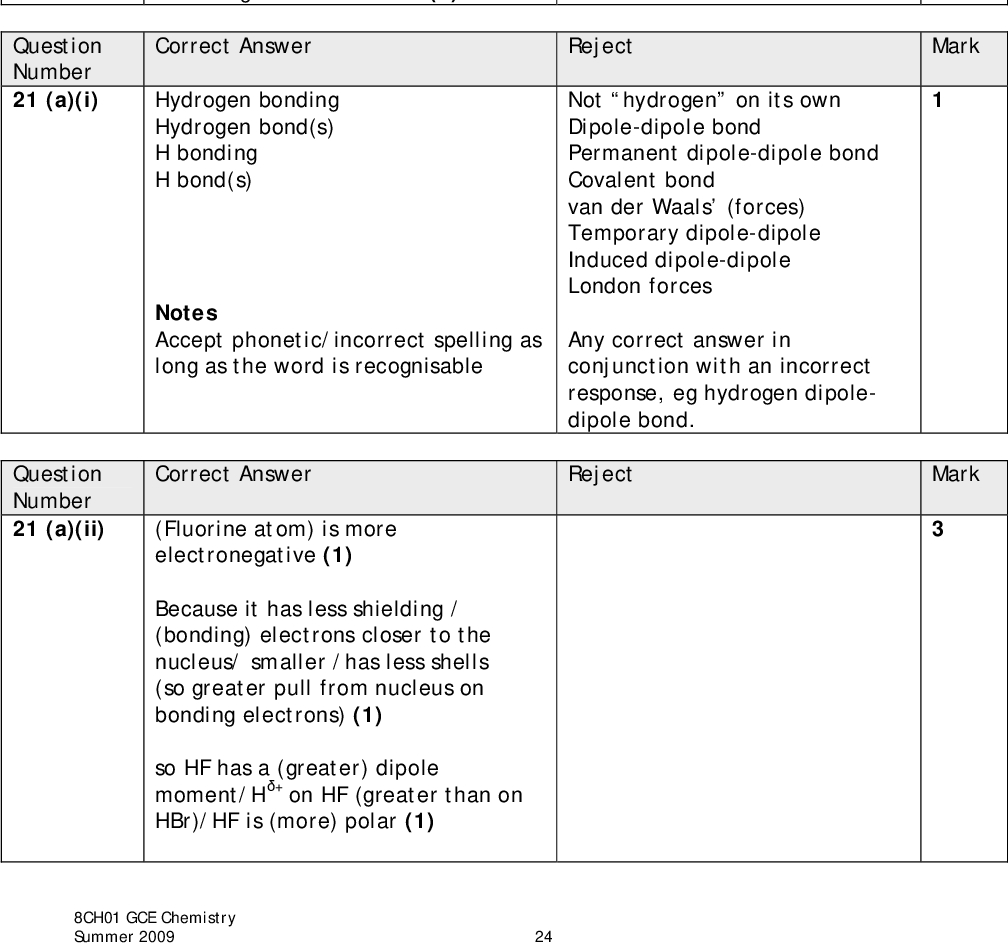
PMT 21 The graph below shows the boiling temperatures of the hydrides of Group 7. Boiling temperatures of Group 7 hydrides (a) (i) Identify the type of intermolecular force that gives rise to the unusually high boiling temperature of hydrogen fluoride. (1)(ii) State and explain whether the electronegativity of fluorine is greater than, similar to or less than, that of bromine. Hence explain why hydrogen fluoride can form the type of intermolecular force named in (a)(i) but hydrogen bromide cannot. (3)14 *h34472A01424*<br />
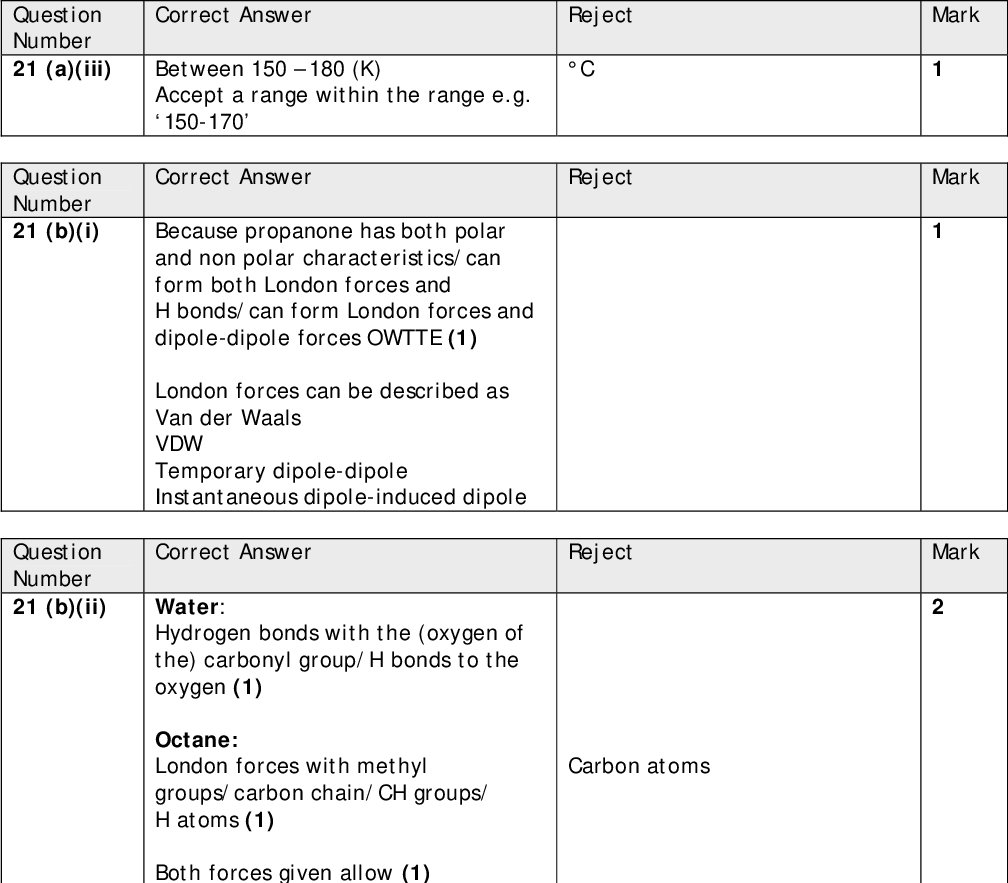
 PMT (iii) Use the graph to predict what the boiling temperature of hydrogen fluoride would be without the presence of the type of intermolecular force named in (a)(i). (1)(b) Propanone, CH3COCH3, is a useful solvent for cleaning glassware in laboratories. (i) Why is propanone able to dissolve a wide range of substances? (1)(ii) Propanone can be used to remove both water and octane from glassware. For each of these substances, identify the strongest intermolecular force formed with propanone and the feature of the propanone molecule involved. (2) WaterOctane(Total for Question 21 = 8 marks) *h34472A01524* 15 Turn over<br />

Show answer