Edexcel Jan 2014 (IAL) Paper 2 Q23

Answers available below

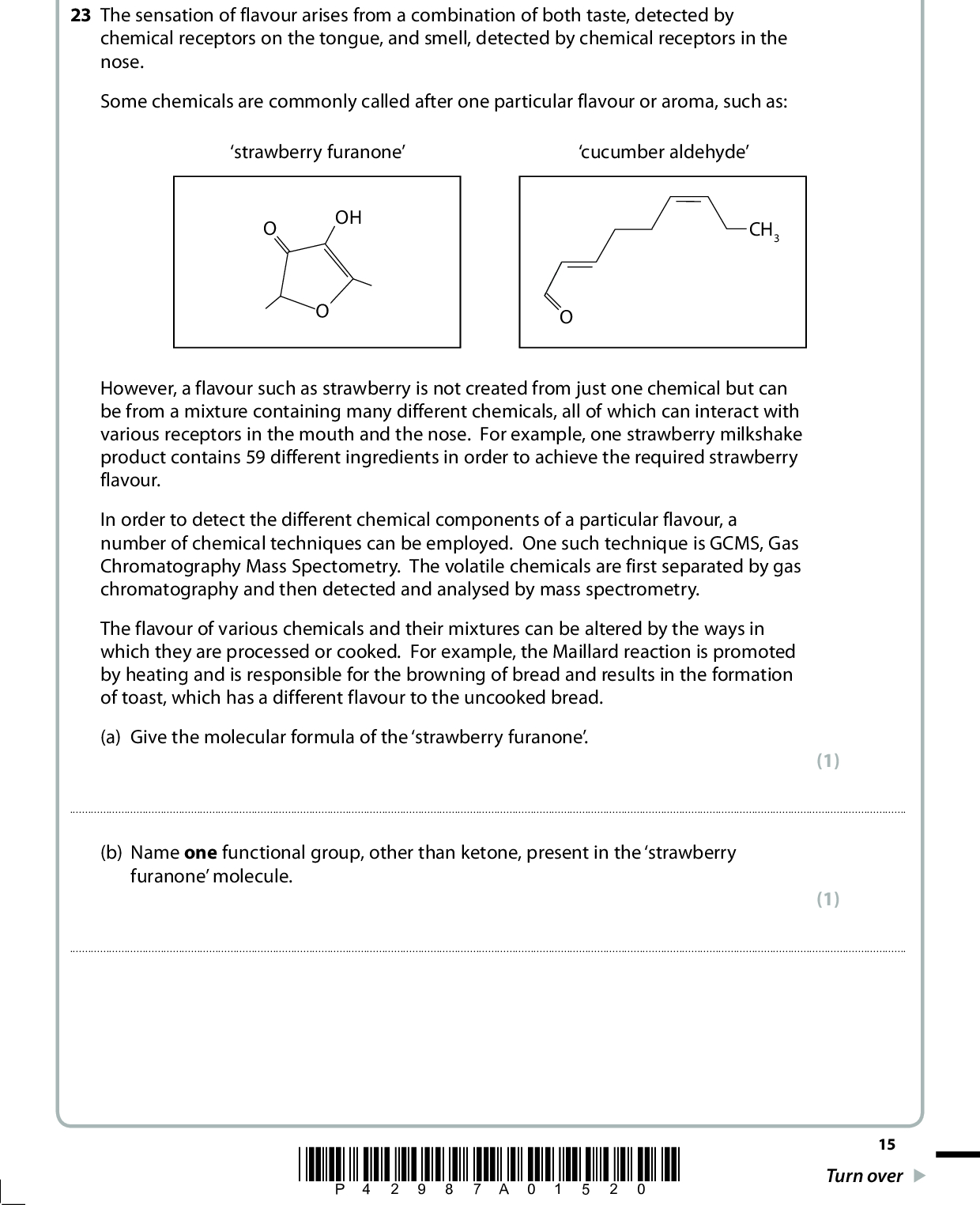
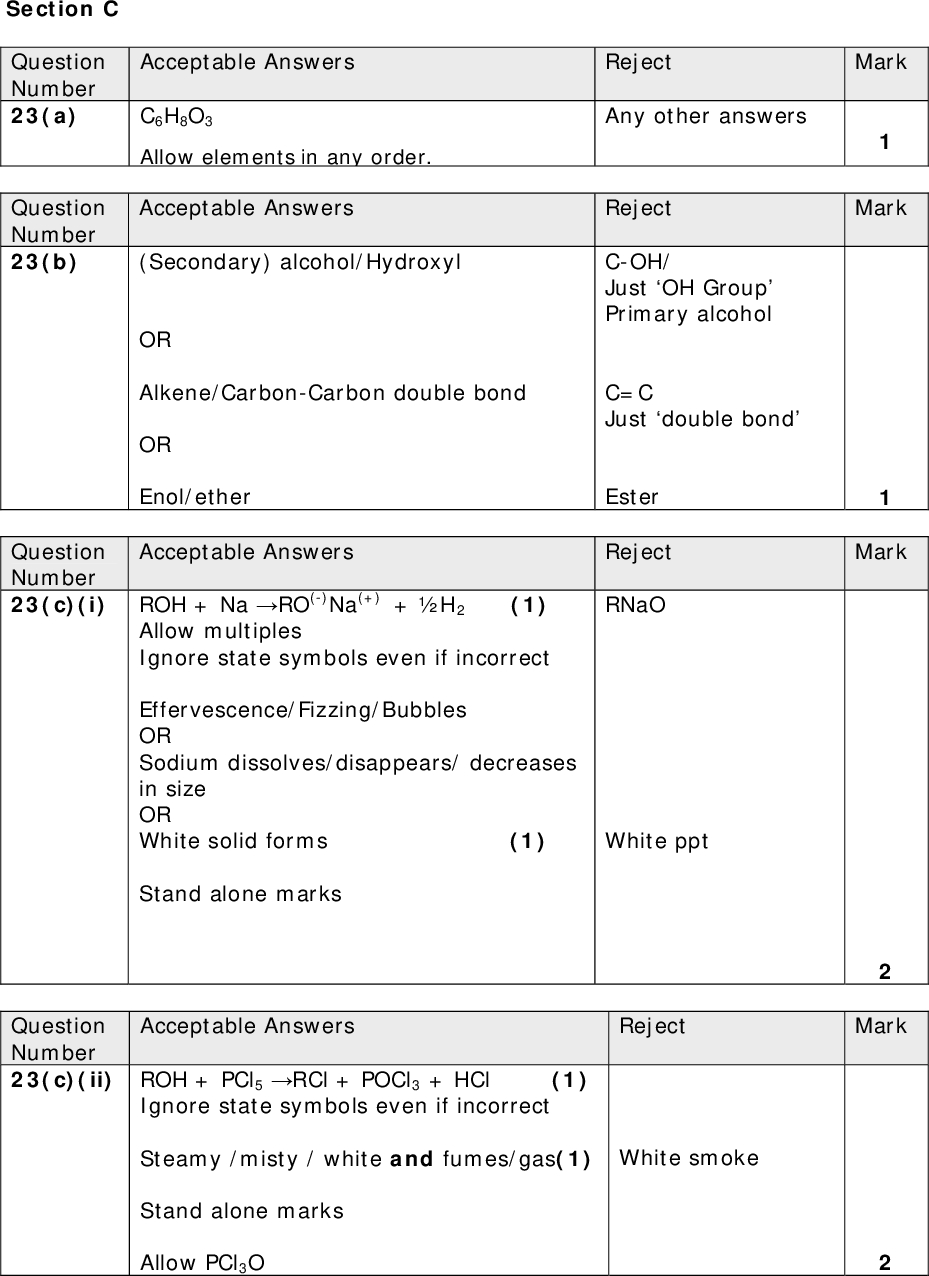
SECTION C Answer ALL the questions. Write your answers in the spaces provided. 23 The sensation of flavour arises from a combination of both taste, detected by chemical receptors on the tongue, and smell, detected by chemical receptors in the nose. Some chemicals are commonly called after one particular flavour or aroma, such as: strawberry furanone cucumber aldehyde OH CH3 However, a flavour such as strawberry is not created from just one chemical but can be from a mixture containing many different chemicals, all of which can interact with various receptors in the mouth and the nose. For example, one strawberry milkshake product contains 59 different ingredients in order to achieve the required strawberry flavour. In order to detect the different chemical components of a particular flavour, a number of chemical techniques can be employed. One such technique is GCMS, Gas Chromatography Mass Spectometry. The volatile chemicals are first separated by gas chromatography and then detected and analysed by mass spectrometry. The flavour of various chemicals and their mixtures can be altered by the ways in which they are processed or cooked. For example, the Maillard reaction is promoted by heating and is responsible for the browning of bread and results in the formation of toast, which has a different flavour to the uncooked bread. (a) Give the molecular formula of the strawberry furanone. (1)(b) Name one functional group, other than ketone, present in the strawberry furanone molecule. (1)*P42987A01520* 15 Turn over<br />
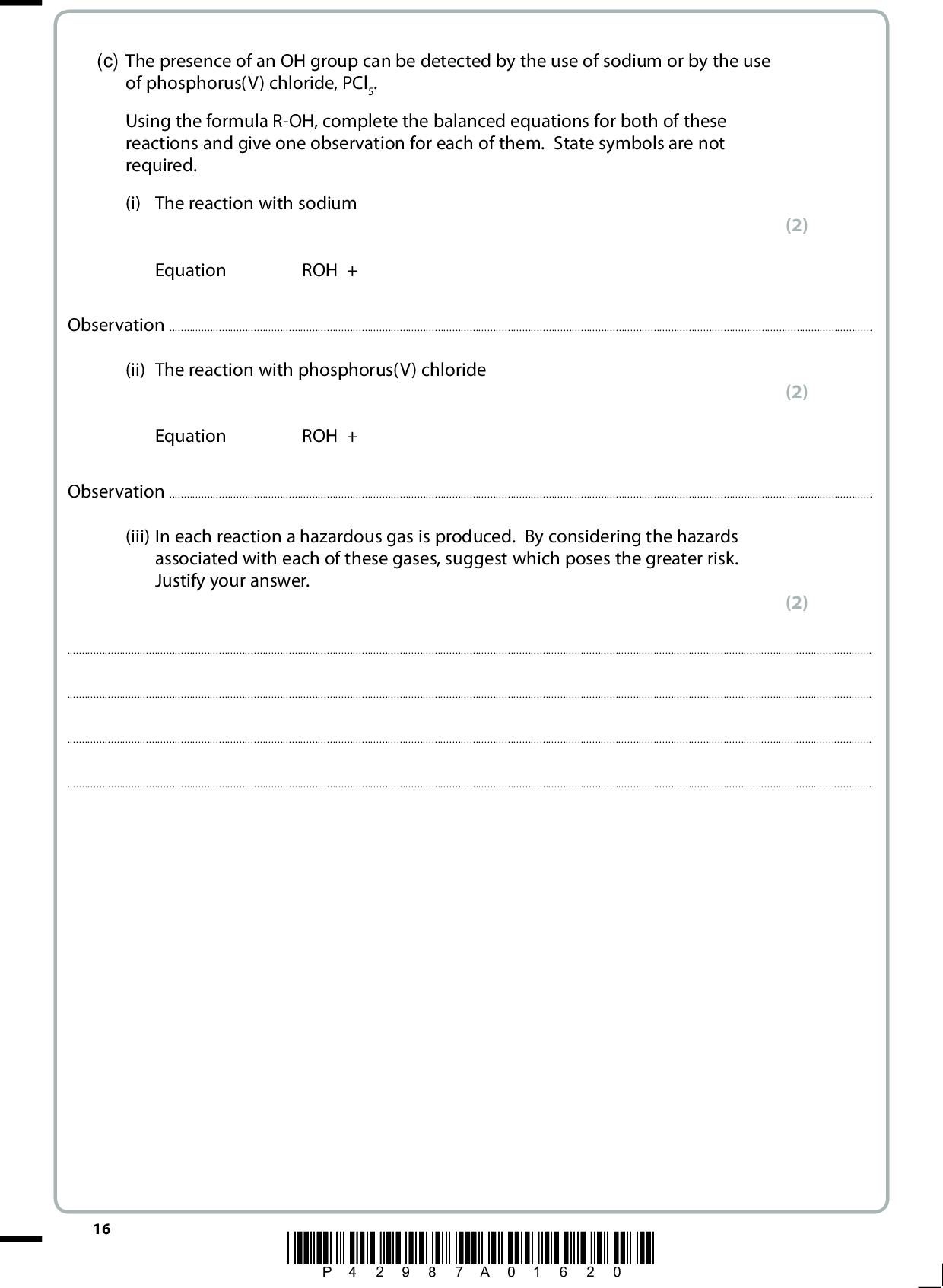
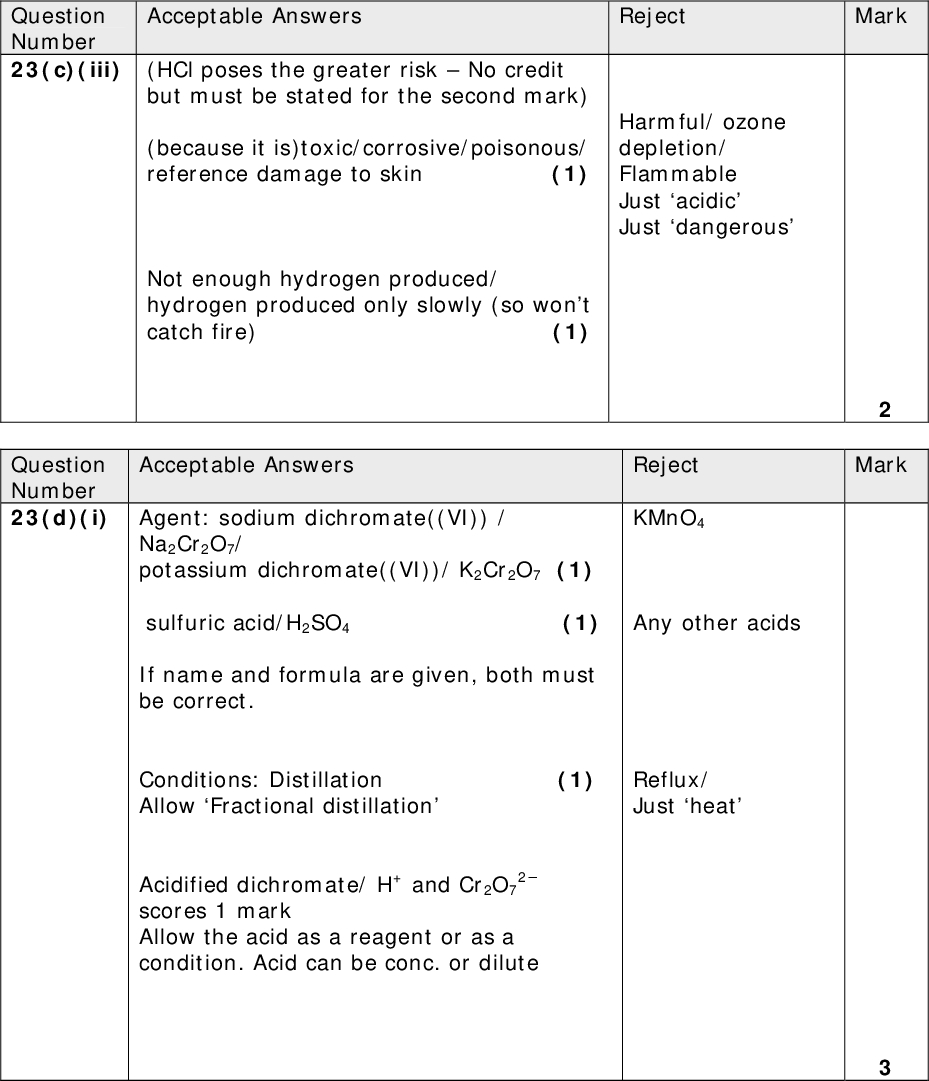
 (c) The presence of an OH group can be detected by the use of sodium or by the use of phosphorus(V) chloride, PCl5. Using the formula R-OH, complete the balanced equations for both of these reactions and give one observation for each of them. State symbols are not required. (i) The reaction with sodium Equation ROH + (2) Observation(ii) The reaction with phosphorus(V) chloride Equation ROH + (2) Observation(iii) In each reaction a hazardous gas is produced. By considering the hazards associated with each of these gases, suggest which poses the greater risk. Justify your answer. (2)16 *P42987A01620*<br />
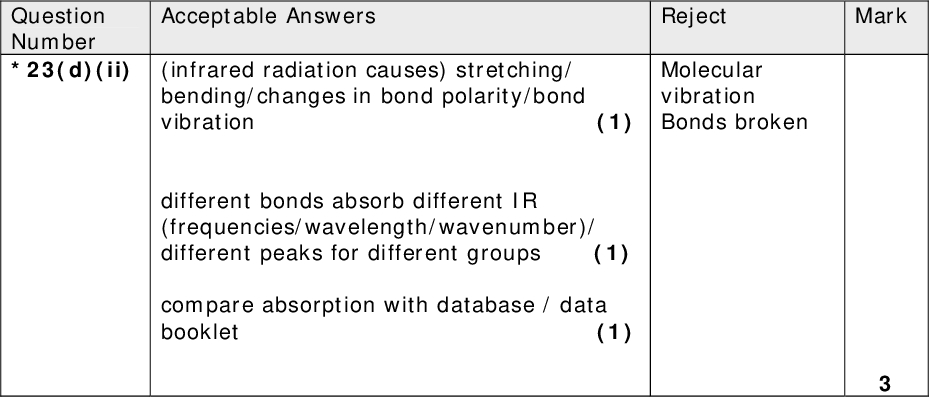
 (d) The cucumber aldehyde can be formed from the oxidation of the corresponding alcohol. (i) Identify by names or formulae, the two reagents that could be used together to oxidize an alcohol to an aldehyde. State the essential reaction condition. (3) Reagents for oxidationCondition*(ii) Infrared spectroscopy can be used to distinguish different functional groups, such as alcohols and aldehydes. State how this analytical technique is used to do this and explain the effect of the radiation on the molecule. Specific values and experimental details are not required. (3)*P42987A01720* 17 Turn over<br />
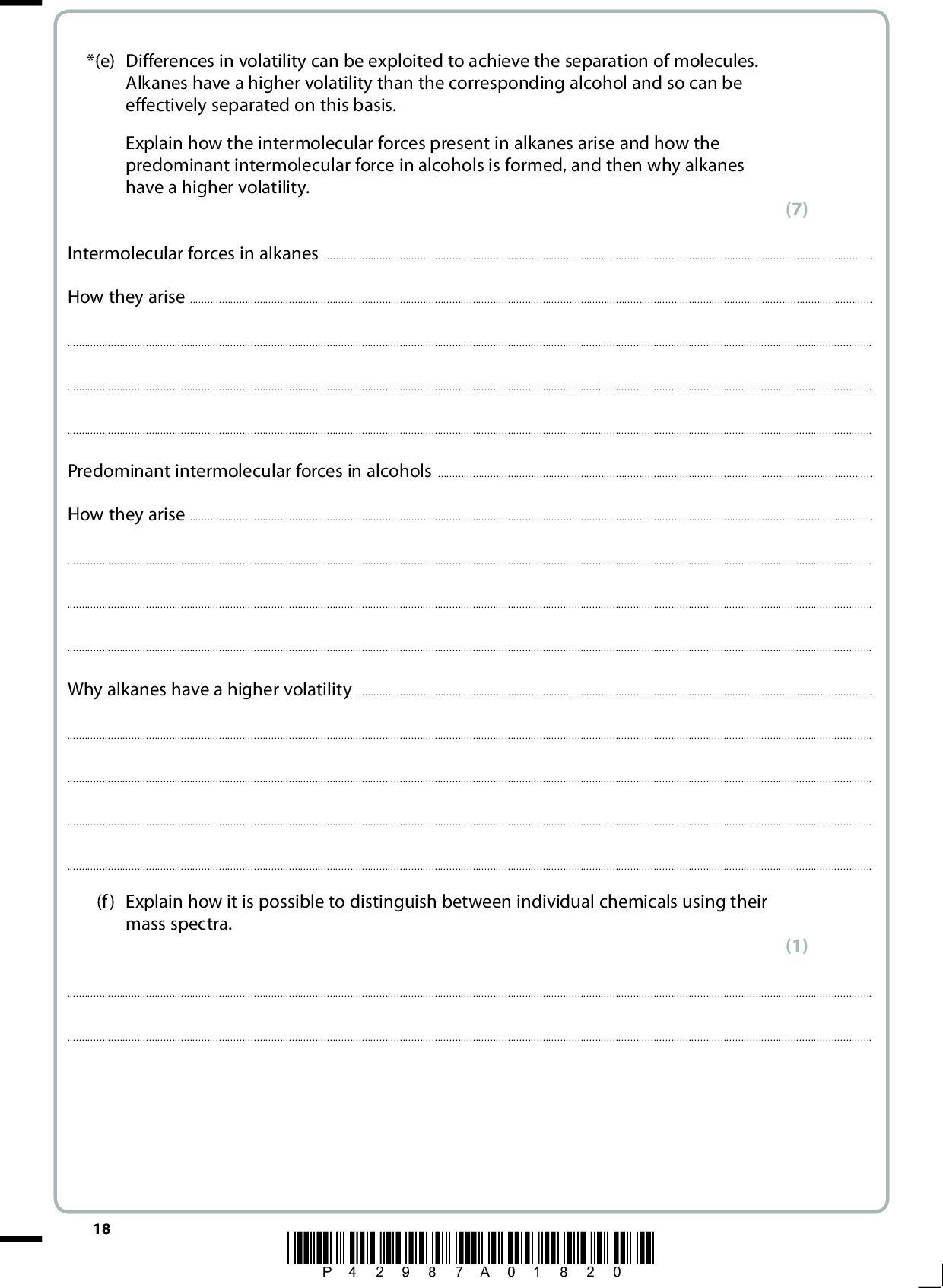
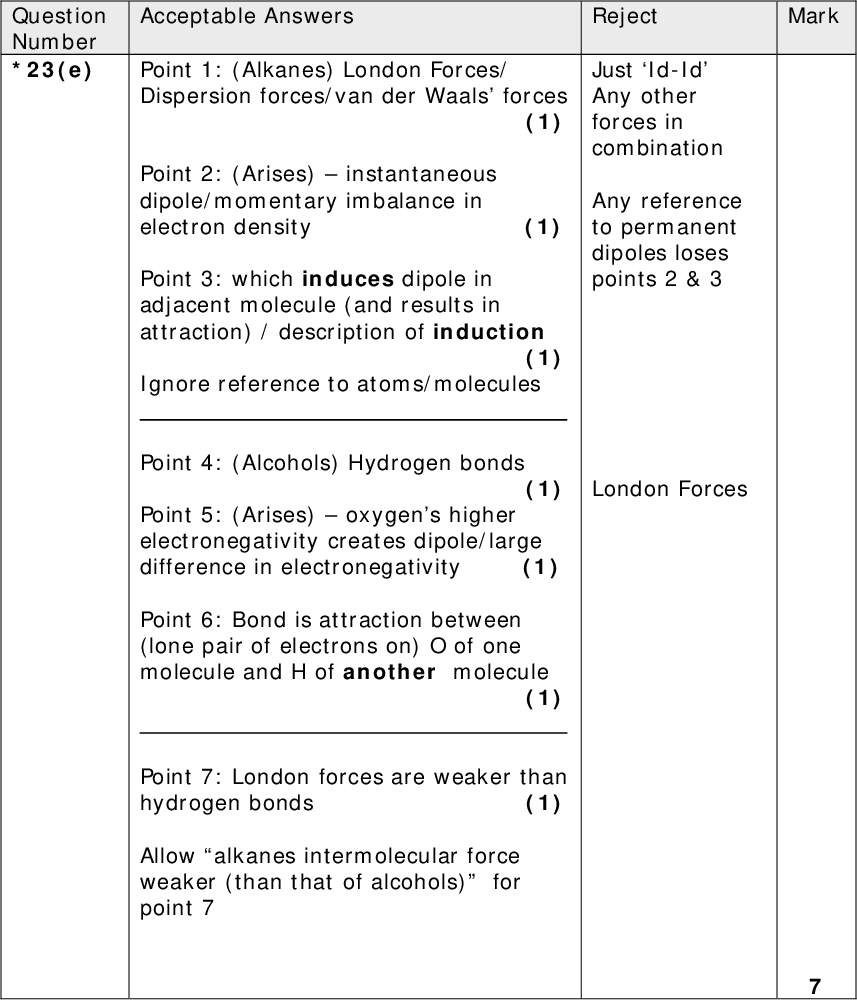
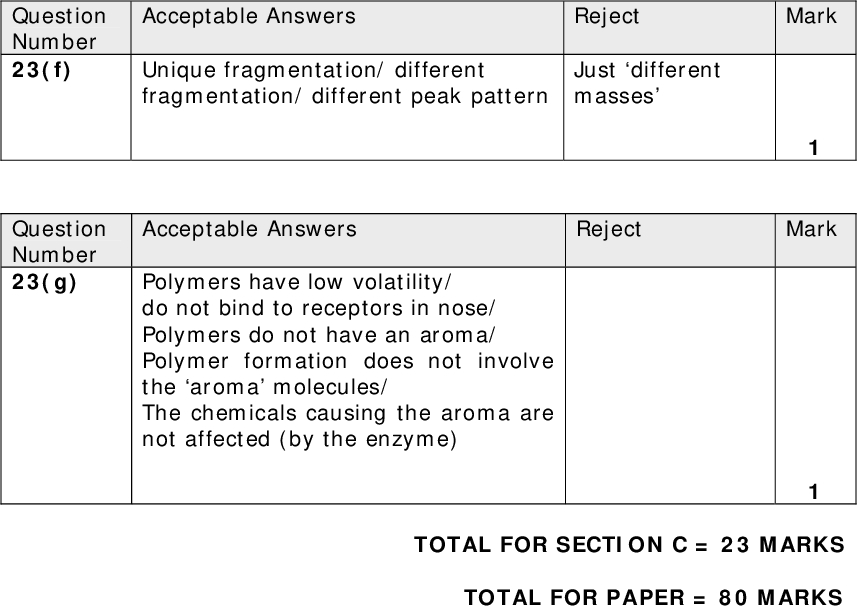
 *(e) Differences in volatility can be exploited to achieve the separation of molecules. Alkanes have a higher volatility than the corresponding alcohol and so can be effectively separated on this basis. Explain how the intermolecular forces present in alkanes arise and how the predominant intermolecular force in alcohols is formed, and then why alkanes have a higher volatility. (7) Intermolecular forces in alkanesHow they arisePredominant intermolecular forces in alcoholsHow they ariseWhy alkanes have a higher volatility(f) Explain how it is possible to distinguish between individual chemicals using their mass spectra. (1)18 *P42987A01820*<br />
 (g) The browning of apples, which can occur when they are bruised, is due to the action of enzymes which create brown polymers. However, this does not affect the aroma of the apples. Suggest why this is so. (1)(Total for Question 23 = 23 marks) TOTAL FOR SECTION C = 23 MARKS TOTAL FOR PAPER = 80 MARKS *P42987A01920* 19<br />

Show answer