Skip to content
Edexcel Jan 2010 Paper 4 Q23
Answers available below
Show answer
Question
21
22
23
24
25
26

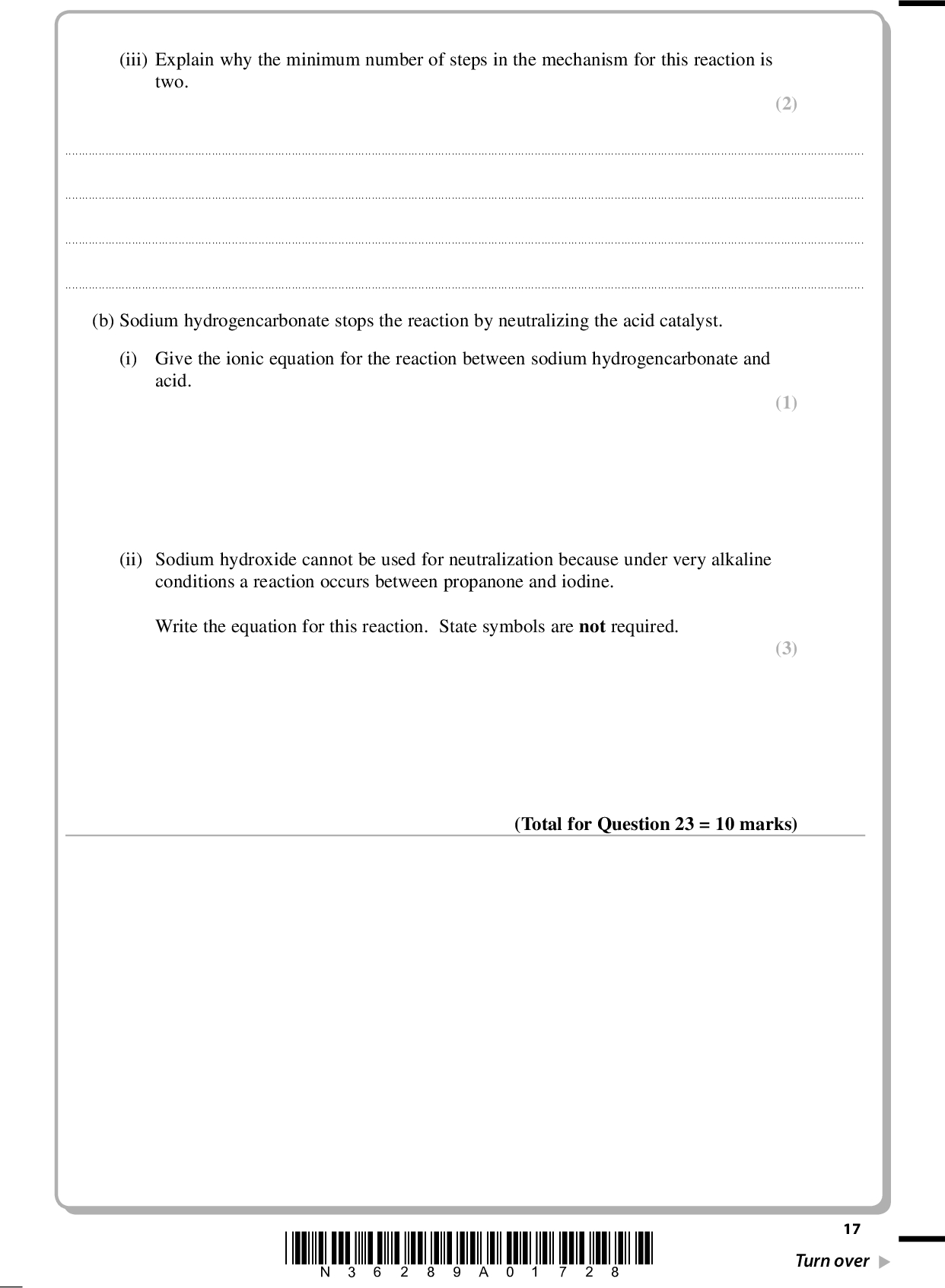
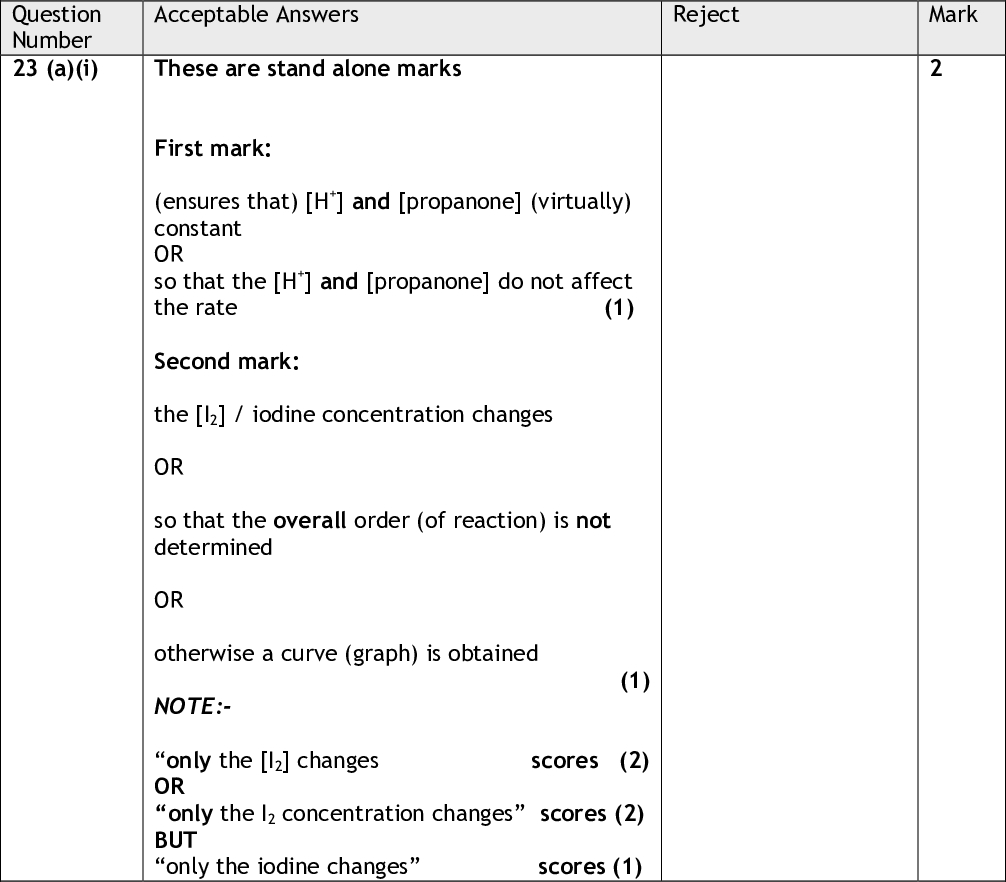
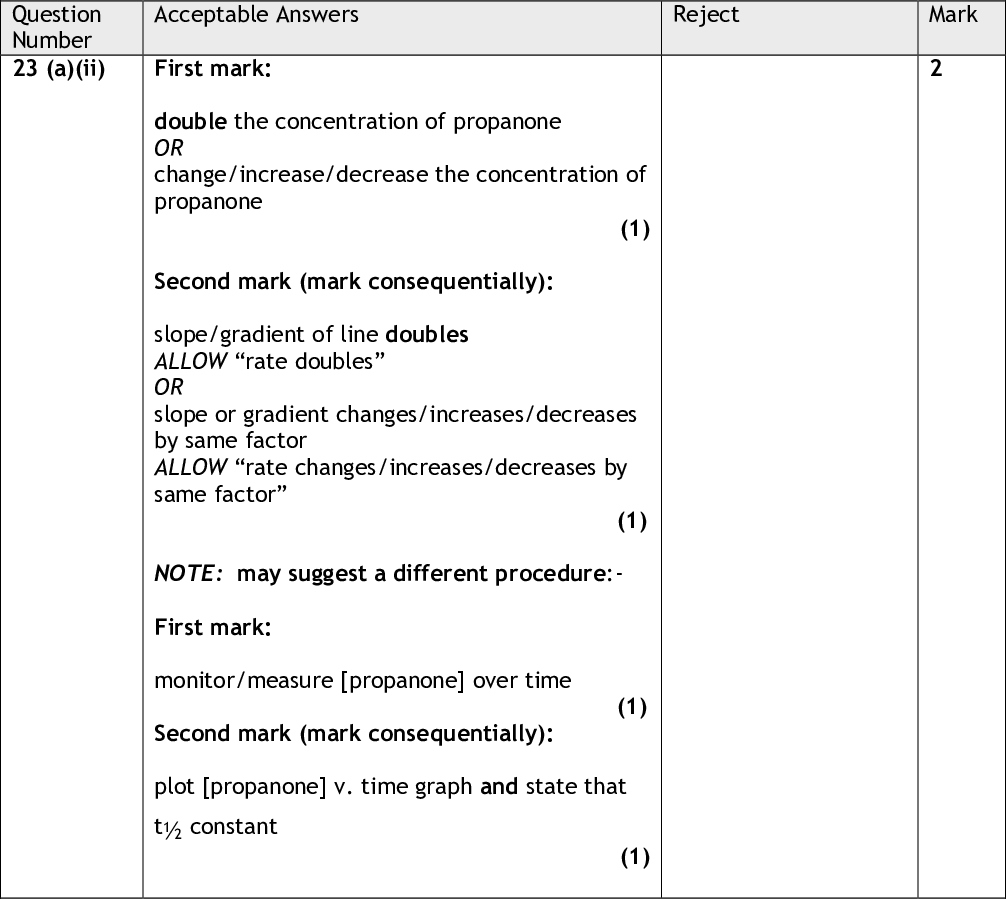
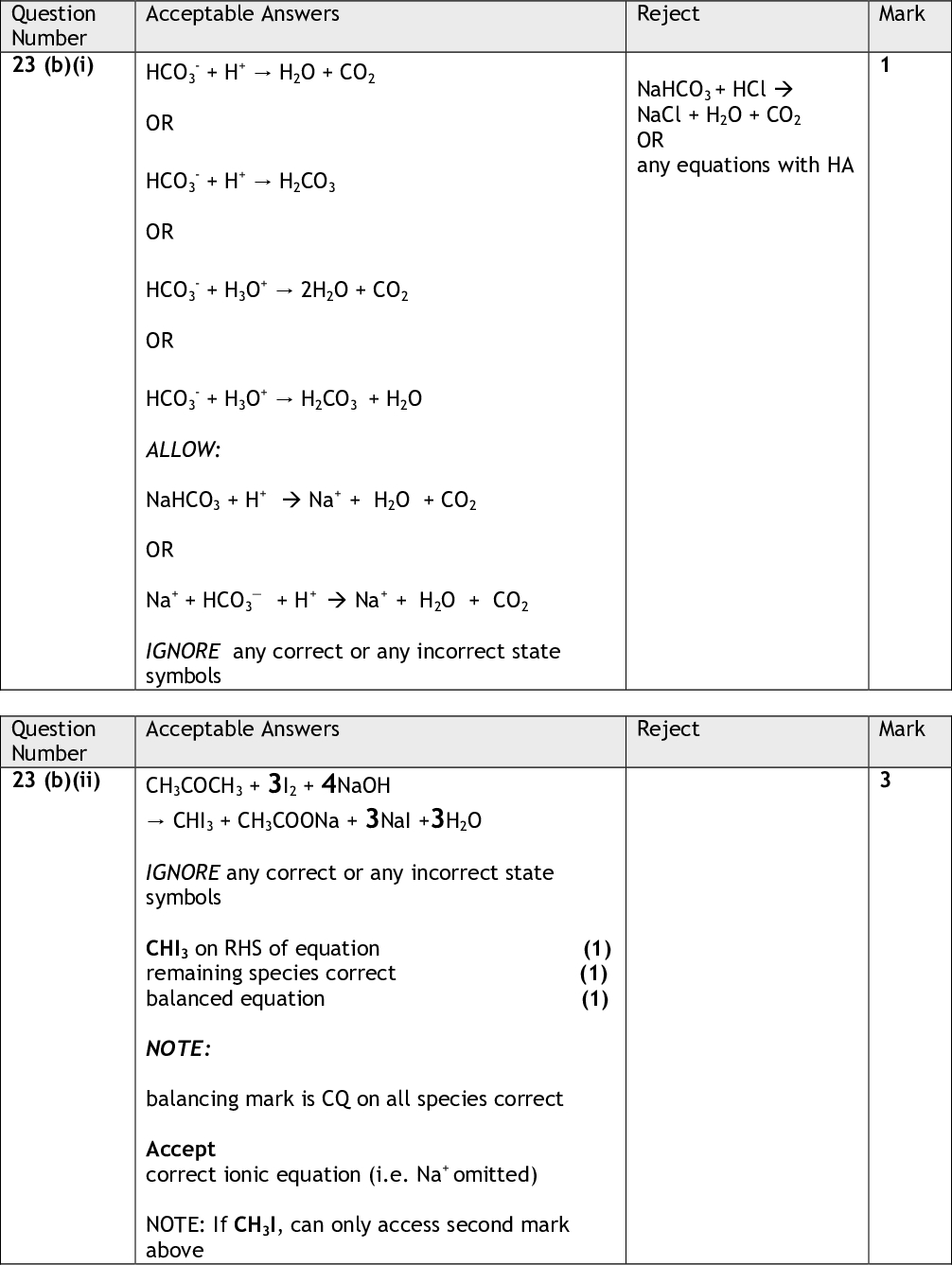
![PMT 23 Iodine and propanone react in the presence of an aqueous acid catalyst as follows CH3COCH3 + I2CH3COCH2I + HI To determine the rate equation for the reaction, propanone is reacted with iodine in the presence of aqueous hydrochloric acid at constant temperature. Samples are withdrawn at known times, quenched with sodium hydrogencarbonate solution, and the iodine remaining titrated with a standard solution of sodium thiosulfate. The rate equation for the reaction is rate = k[CH3COCH3]1 [H+]1 [I2]0 (a) The graph of [I2] against time is a straight line, showing that the order of reaction with respect to iodine is zero. (i) Explain why the propanone and the hydrogen ions must be in large excess in this experiment in order to give this straight line. (2)(ii) What further experiment could be done to show that the order of reaction with respect to propanone is one? State the effect of this change on the graph. (2)16 *N36289A01628*<br />
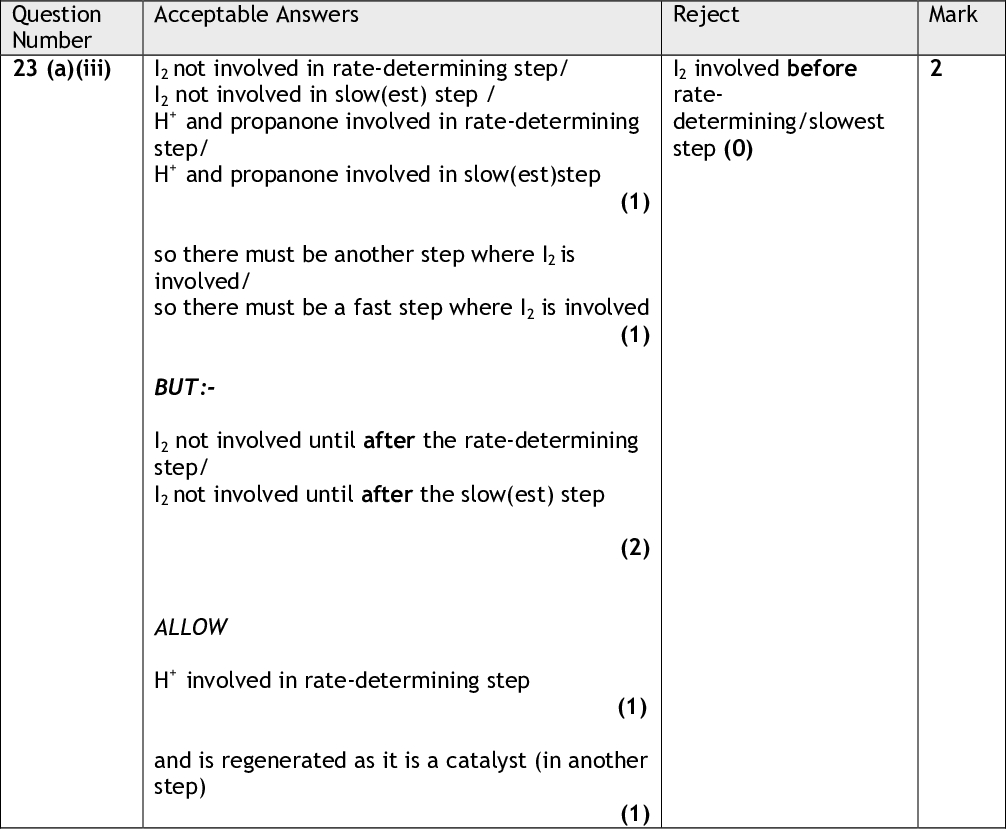
PMT (iii) Explain why the minimum number of steps in the mechanism for this reaction is (2) (1) two. acid.(b) Sodium hydrogencarbonate stops the reaction by neutralizing the acid catalyst. (i) Give the ionic equation for the reaction between sodium hydrogencarbonate and (ii) Sodium hydroxide cannot be used for neutralization because under very alkaline conditions a reaction occurs between propanone and iodine. Write the equation for this reaction. State symbols are not required. (3) (Total for Question 23 = 10 marks) *N36289A01728* 17 Turn over<br />](https://learnah.org/wp-content/uploads/2018/08/l_smalljpgJanuary_2010_QP_-_Unit_4_Edexcel_Chemistry_A-level_23-0.jpg)