Skip to content
OCR A Specimen Paper 1 Q19
Answers available below
Show answer
Question
16
17
18
19
20
21
22
23
24

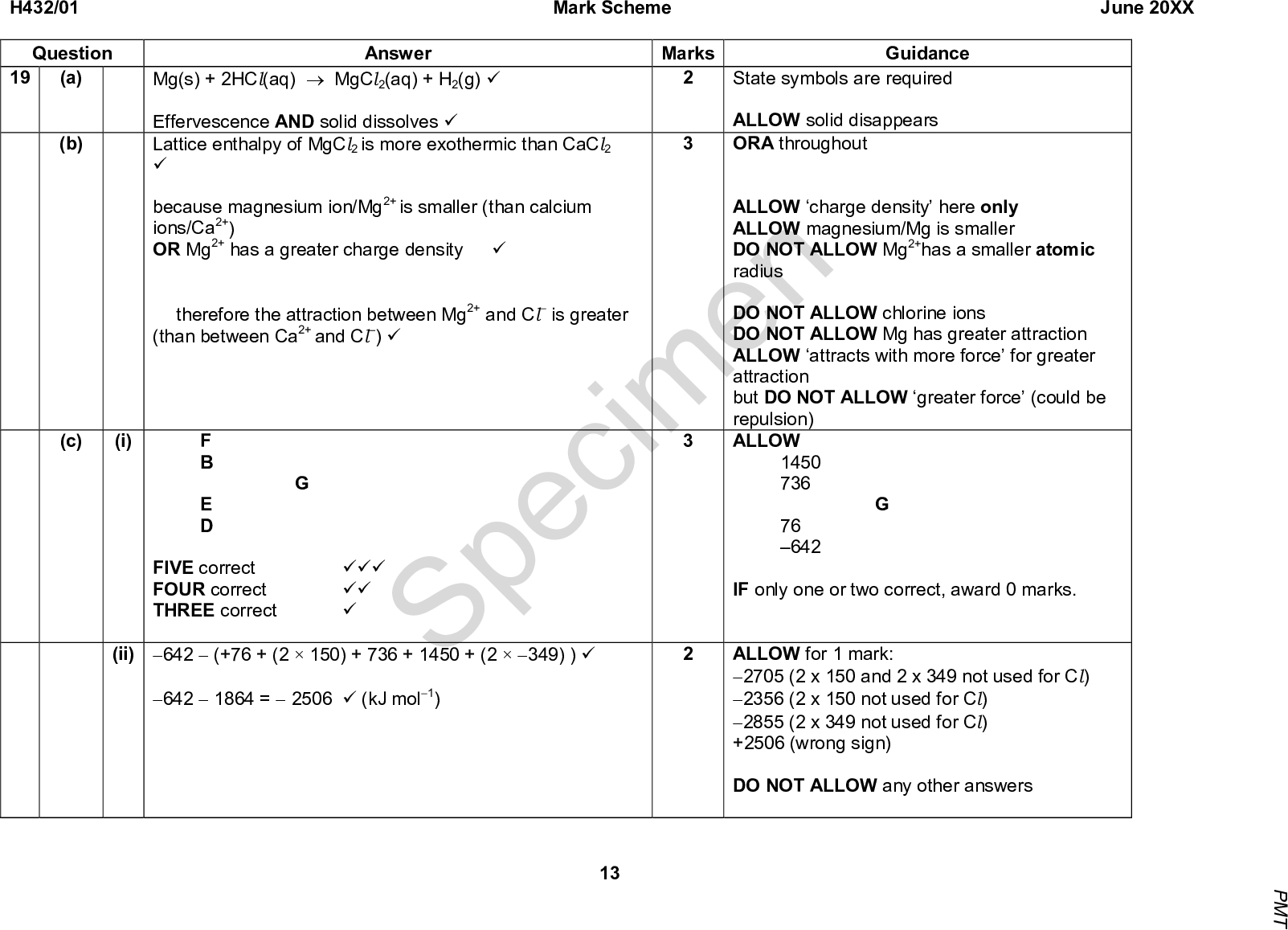
![18 19 This question is about the chemistry of the elements in Group 2 and the halogens. (a) A student prepares an aqueous solution of magnesium chloride by reacting magnesium with excess hydrochloric acid. Write an equation, including state symbols, for this reaction and state the observation(s) the student should make whilst carrying out this experiment. equation: . observation(s): . (b) Lattice enthalpies give an indication of the strength of ionic bonding. How would the lattice enthalpies of magnesium chloride and calcium chloride differ? Explain your answer. Specimen[2] [3]OCR 2014 H432/01<br />
19 (c) The table below shows the enthalpy changes that are needed to determine the lattice enthalpy of magnesium chloride, MgCl2. Letter Enthalpy change A B C D E F G 1st electron affinity of chlorine 1st ionisation energy of magnesium atomisation of chlorine formation of magnesium chloride atomisation of magnesium 2nd ionisation energy of magnesium lattice enthalpy of magnesium chloride (i) On the cycle below, write the correct letter in each box. Energy / kJ mol1 349 +736 +150 642 +76 +1450 Specimen (ii) Use the BornHaber cycle to calculate the lattice enthalpy of magnesium chloride.OCR 2014 lattice enthalpy =kJ mol1 H432/01 [2] Turn over [3]<br />
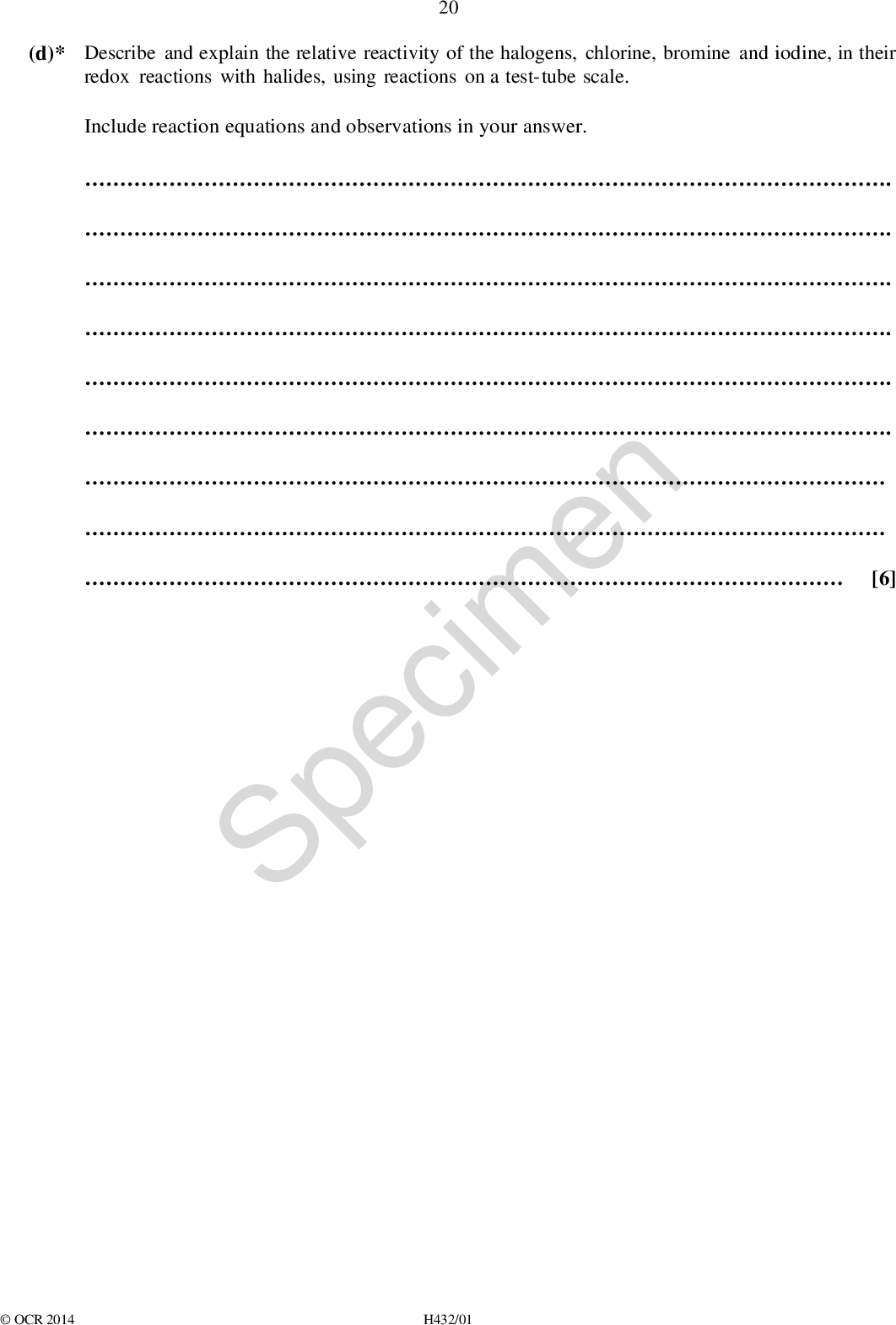
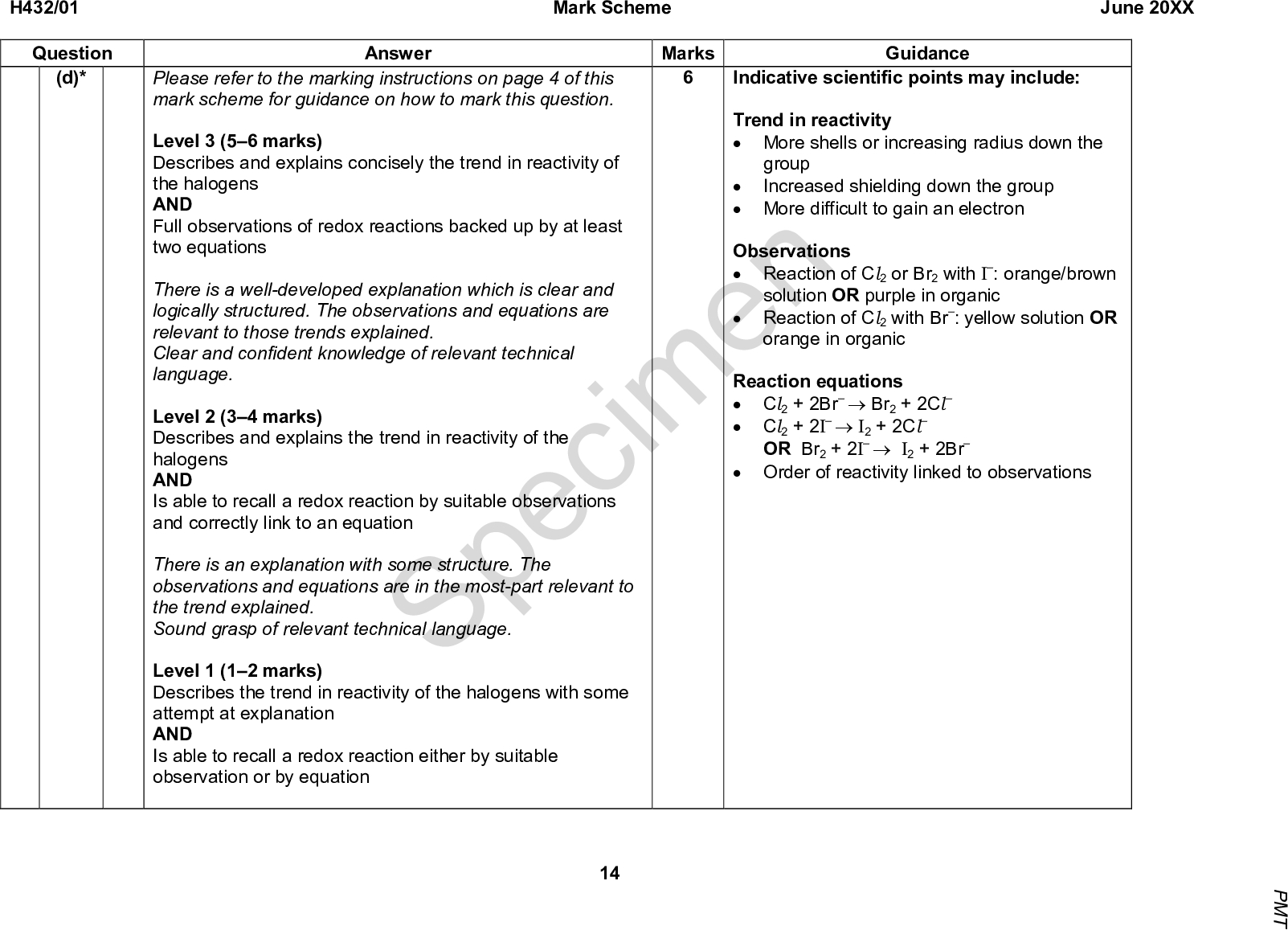
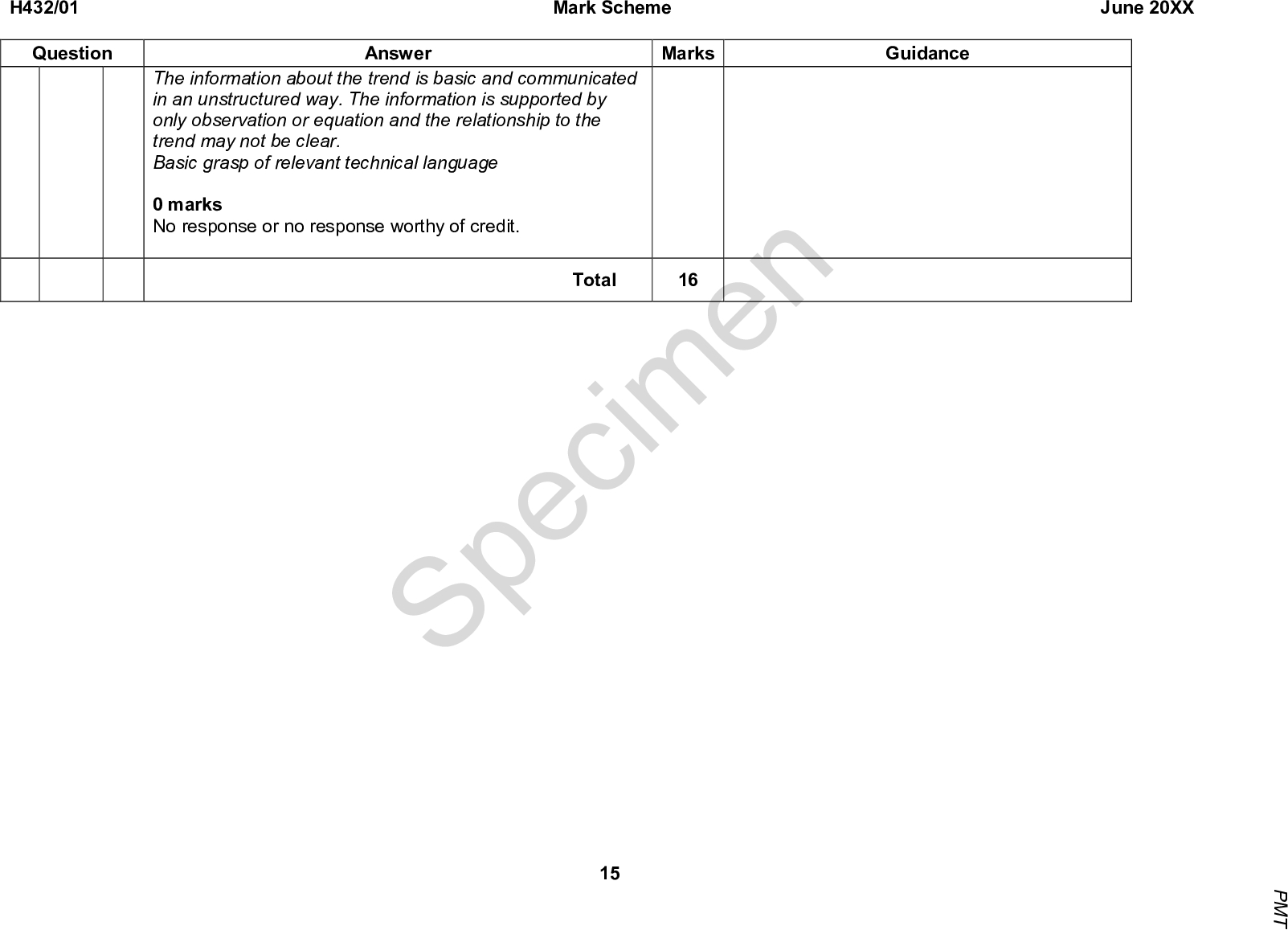
20 (d)* Describe and explain the relative reactivity of the halogens, chlorine, bromine and iodine, in their redox reactions with halides, using reactions on a test-tube scale. Include reaction equations and observations in your answer. . . . . . .[6] SpecimenOCR 2014 H432/01<br />
21 BLANK PAGE SpecimenOCR 2014 H432/01 Turn over<br />](https://learnah.org/wp-content/uploads/2018/08/Specimen_QP_-_Paper_1_OCR_Chemistry_A_A-Level_19-0.jpg)