Edexcel Jun 2016 Paper 1 Q18

Answers available below

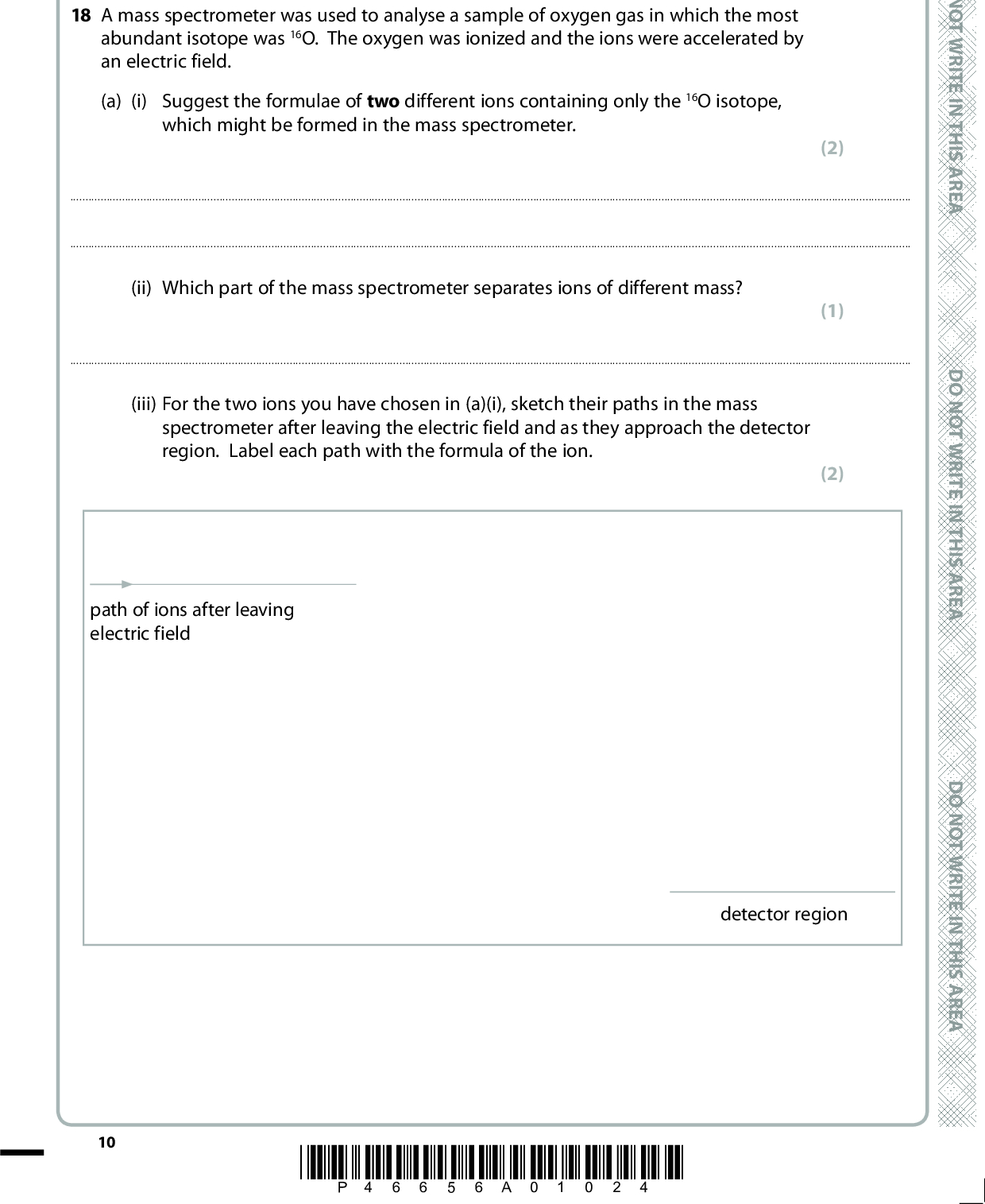
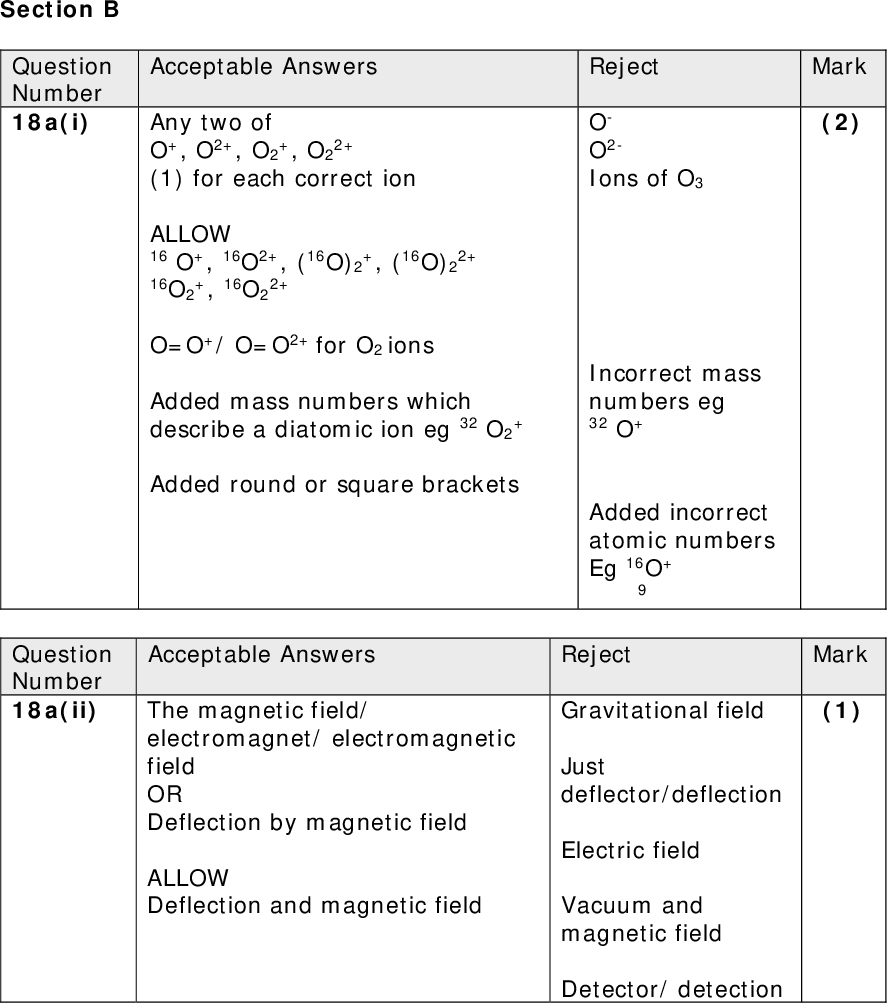
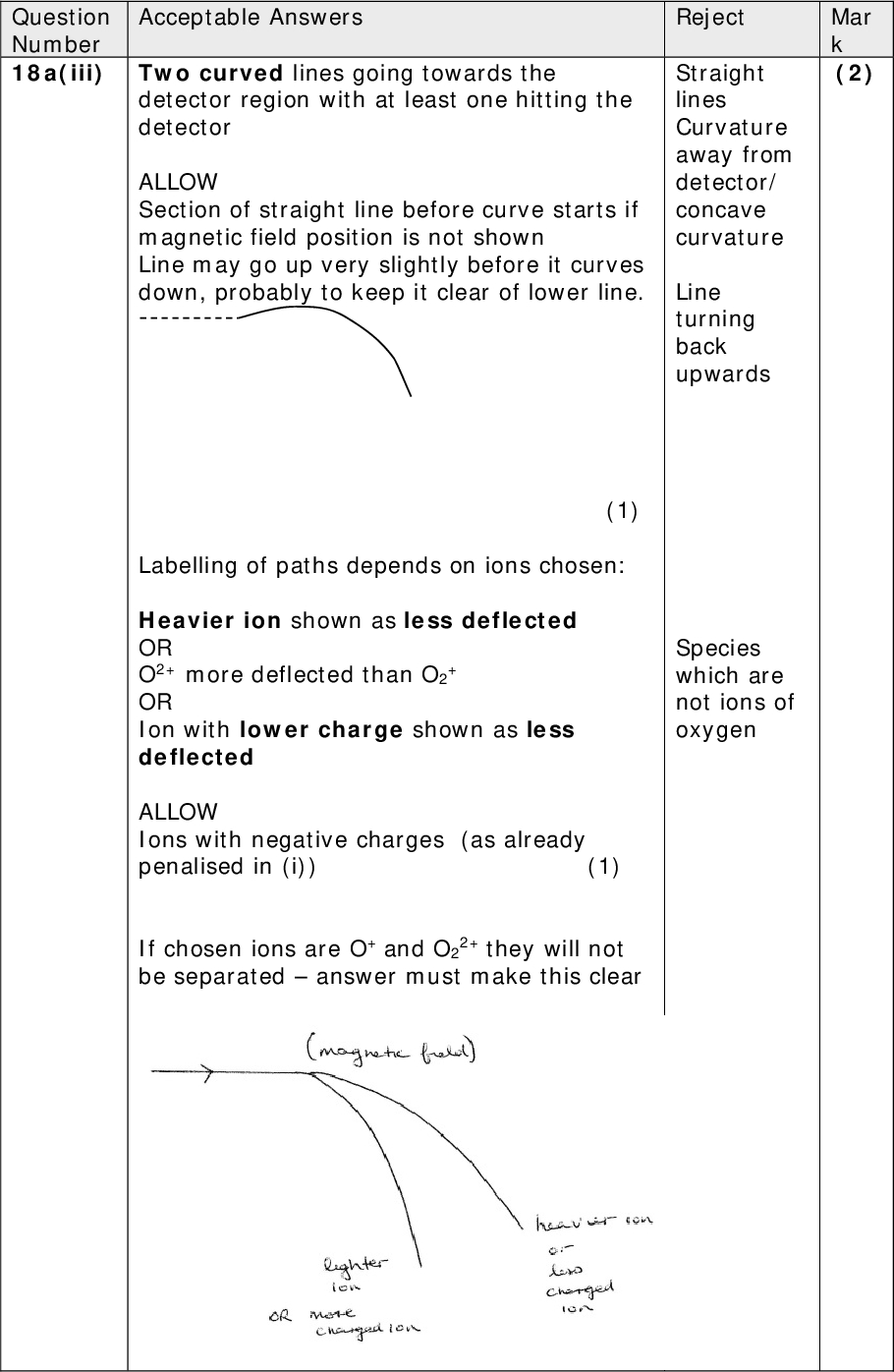
SECTION B Answer ALL the questions. Write your answers in the spaces provided. 18 A mass spectrometer was used to analyse a sample of oxygen gas in which the most abundant isotope was 16O. The oxygen was ionized and the ions were accelerated by an electric field. (a) (i) Suggest the formulae of two different ions containing only the 16O isotope, which might be formed in the mass spectrometer. (2)D O N O T W R I T E I N T H I S A R E A(ii) Which part of the mass spectrometer separates ions of different mass? (1)(iii) For the two ions you have chosen in (a)(i), sketch their paths in the mass spectrometer after leaving the electric field and as they approach the detector region. Label each path with the formula of the ion. (2) path of ions after leaving electric field detector region 10 *P46656A01024* D O N O T W R I T E I N T H I S A R E A D O N O T W R I T E I N T H I S A R E A<br />
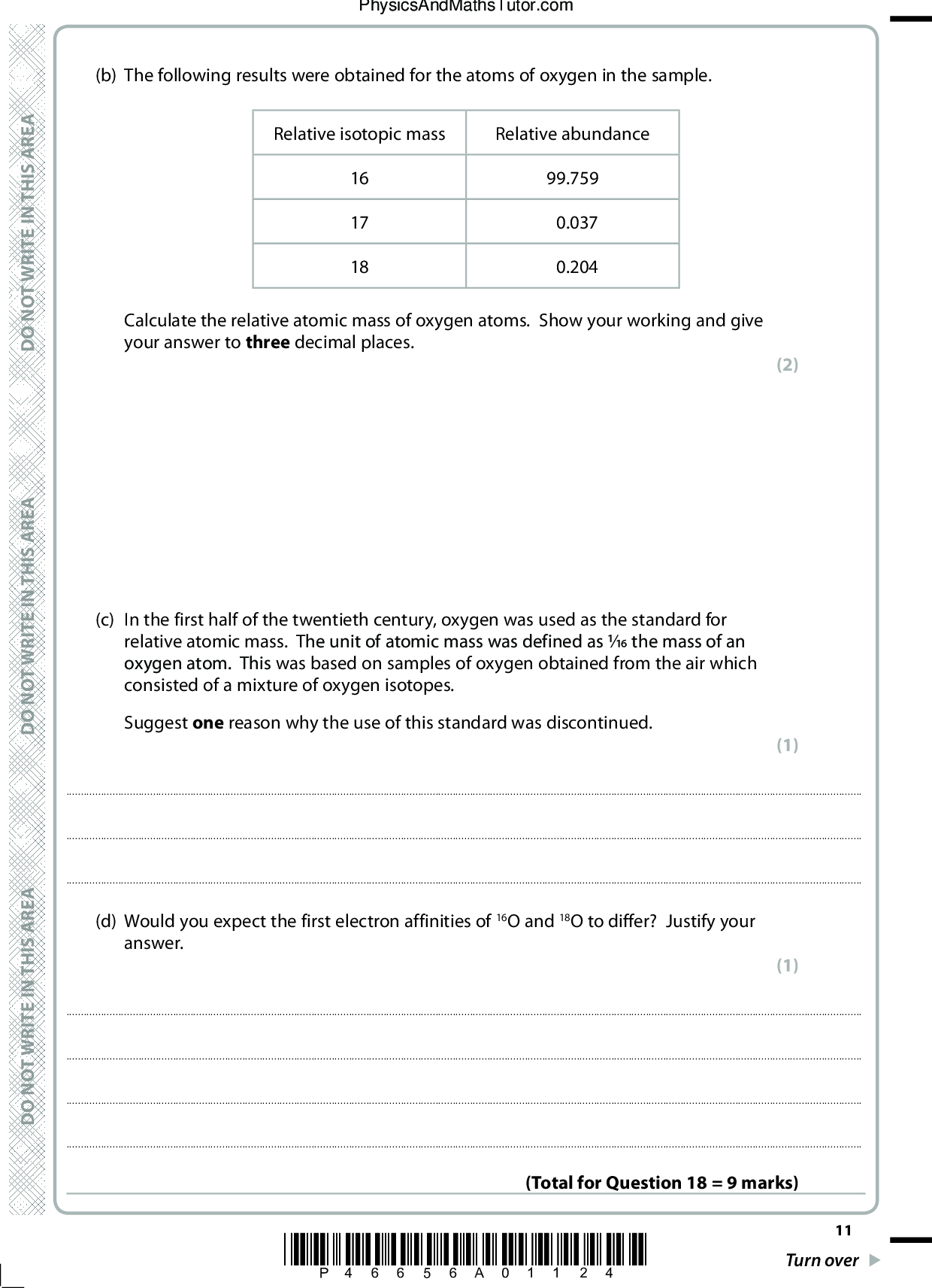
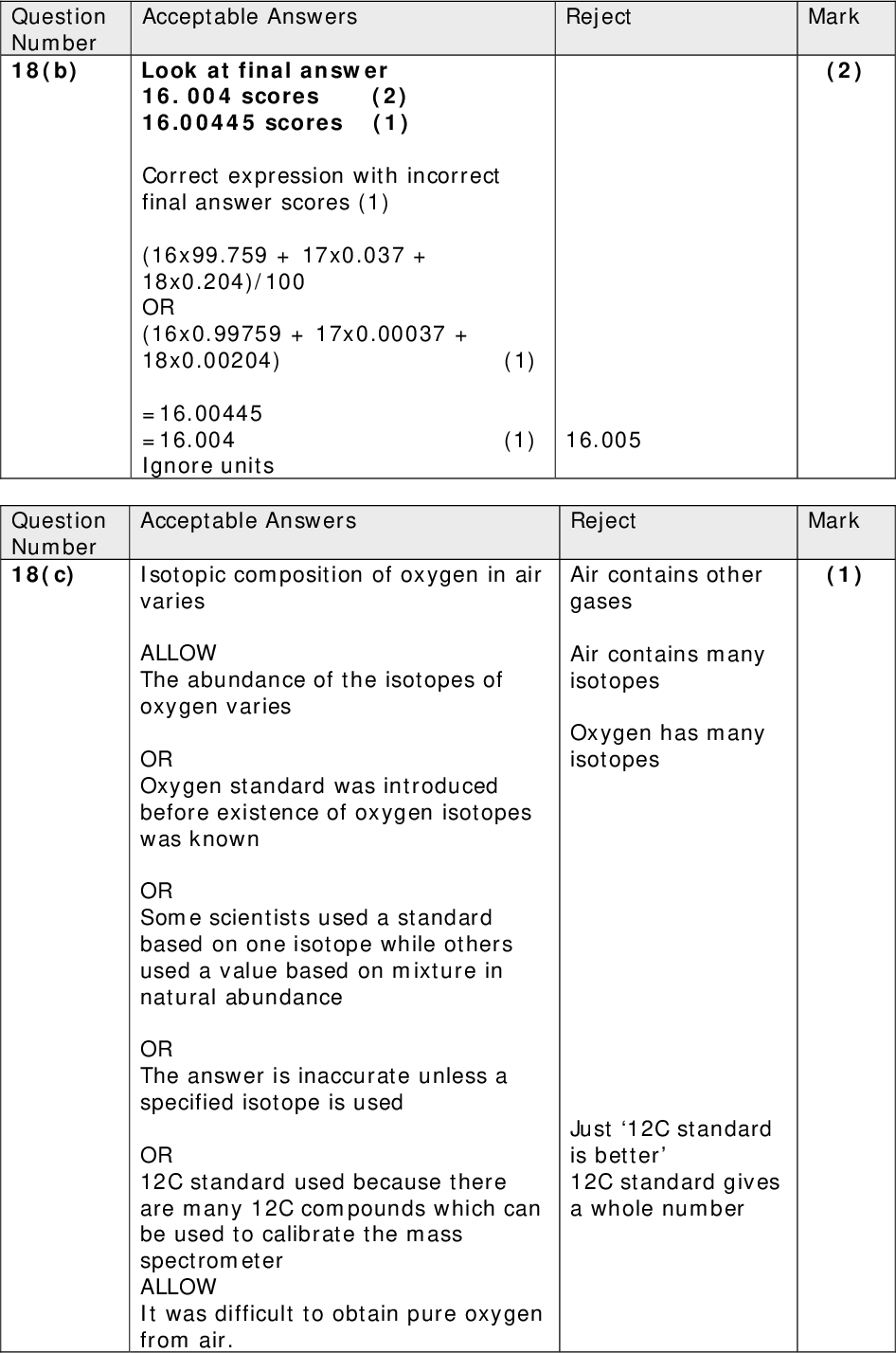
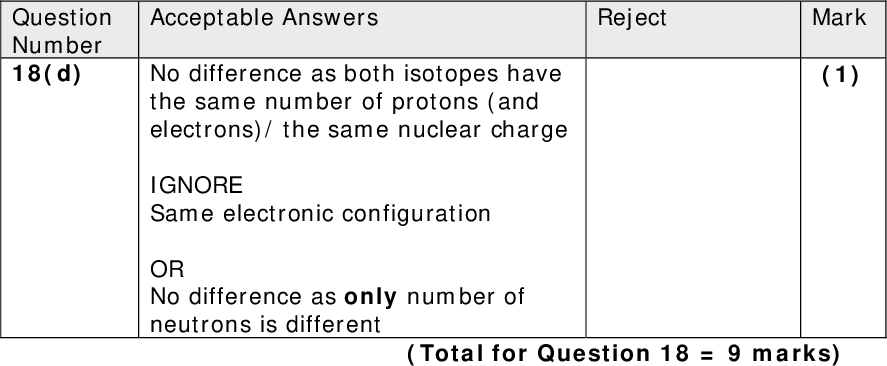
 (b) The following results were obtained for the atoms of oxygen in the sample. Relative isotopic mass Relative abundance 16 17 18 99.759 0.037 0.204 Calculate the relative atomic mass of oxygen atoms. Show your working and give your answer to three decimal places. (c) In the first half of the twentieth century, oxygen was used as the standard for relative atomic mass. The unit of atomic mass was defined as 116 the mass of an oxygen atom. This was based on samples of oxygen obtained from the air which consisted of a mixture of oxygen isotopes. Suggest one reason why the use of this standard was discontinued. (2) (1) A E R A S I H T N I E T I R W T O N O D A E R A S I H T N I E T I R W T O N O DA E R A S I H T N I E T I R W T O N O D (d) Would you expect the first electron affinities of 16O and 18O to differ? Justify your answer. (1)(Total for Question 18 = 9 marks) *P46656A01124* 11 Turn over<br />

Show answer