Skip to content
Edexcel Jun 2016 (IAL) Paper 4 Q
Answers available below
Show answer
Question
12
13
14
15

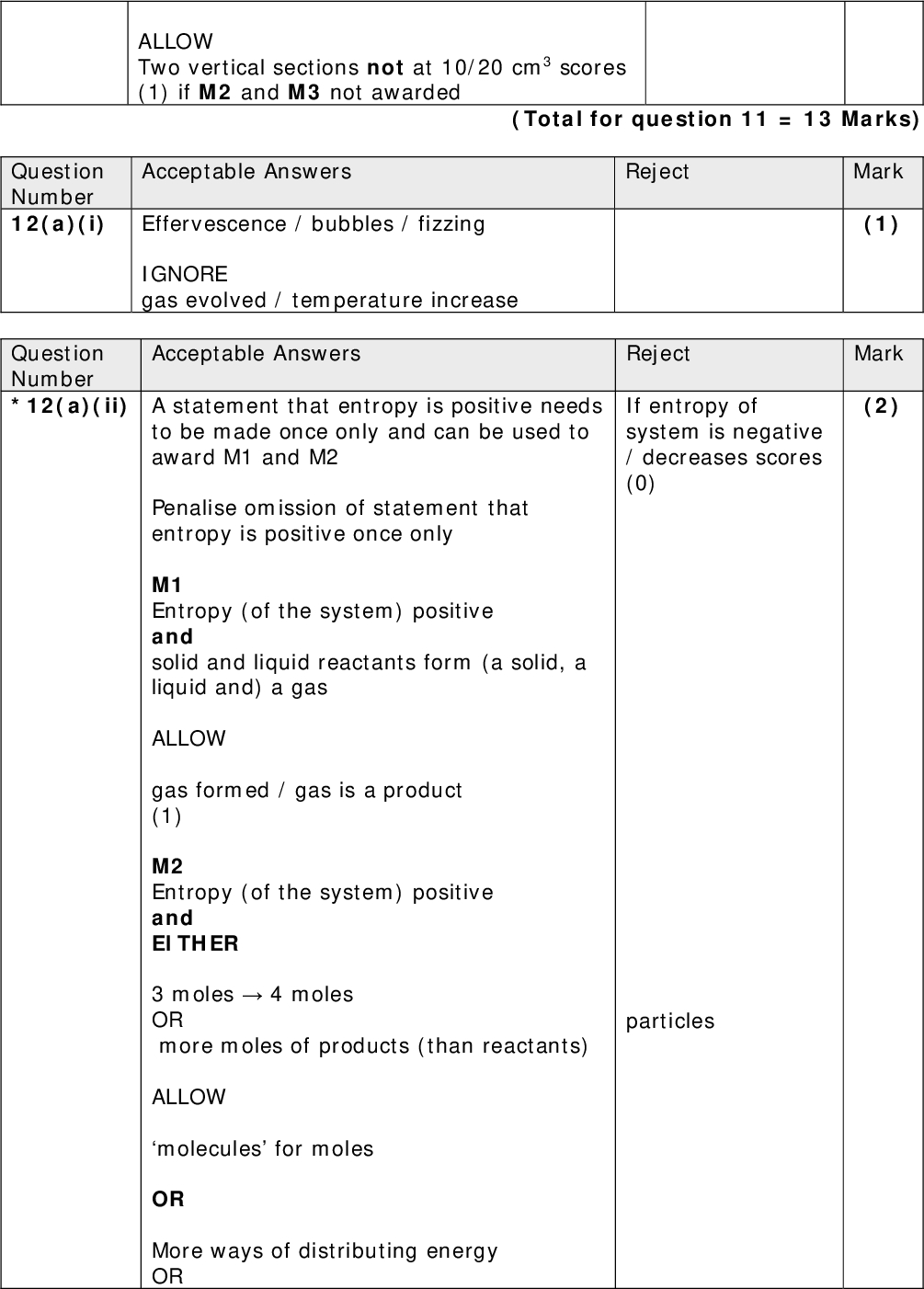
![12 This is a question about entropy changes. (a) Consider the reaction between solid ammonium carbonate and pure ethanoic acid. The equation for this reaction is (NH4)2CO3(s) + 2CH3COOH(l) (cid:111) 2CH3COONH4(s) + H2O(l) + CO2(g) (i) State what you would observe as this reaction occurs. (1)D O N O T W R I T E I N T H I S A R E A *(ii) Predict the sign of the entropy change of the system, (cid:507)S (cid:57) system. Fully justify your answer. No calculation is required. (2)16 *P46664A01628* D O N O T W R I T E I N T H I S A R E A D O N O T W R I T E I N T H I S A R E A<br />
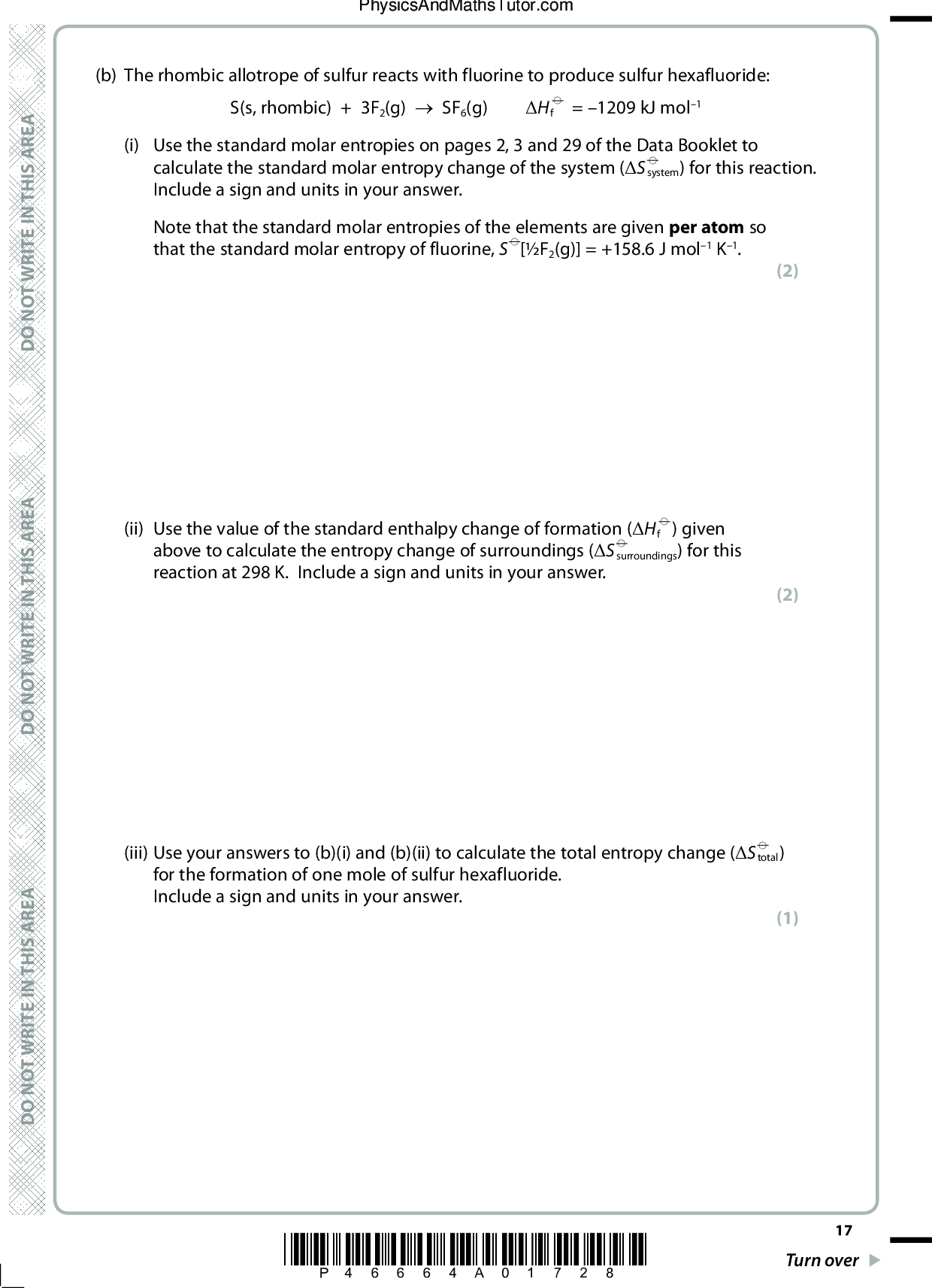
(b) The rhombic allotrope of sulfur reacts with fluorine to produce sulfur hexafluoride: S(s, rhombic) + 3F2(g) (cid:111) SF6(g) (cid:507)Hf (cid:57) = 1209 kJ mol1 (i) Use the standard molar entropies on pages 2, 3 and 29 of the Data Booklet to calculate the standard molar entropy change of the system ((cid:507)S (cid:57) Include a sign and units in your answer. system) for this reaction. Note that the standard molar entropies of the elements are given per atom so that the standard molar entropy of fluorine, S (cid:57)[F2(g)] = +158.6 J mol1 K1. (ii) Use the value of the standard enthalpy change of formation ((cid:507)H f above to calculate the entropy change of surroundings ((cid:507)S (cid:57) reaction at 298 K. Include a sign and units in your answer. (cid:57) ) given surroundings) for this (2) (2) (iii) Use your answers to (b)(i) and (b)(ii) to calculate the total entropy change ((cid:507)S (cid:57) total) for the formation of one mole of sulfur hexafluoride. Include a sign and units in your answer. (1) A E R A S I H T N I E T I R W T O N O D A E R A S I H T N I E T I R W T O N O D A E R A S I H T N I E T I R W T O N O D *P46664A01728* 17 Turn over<br />
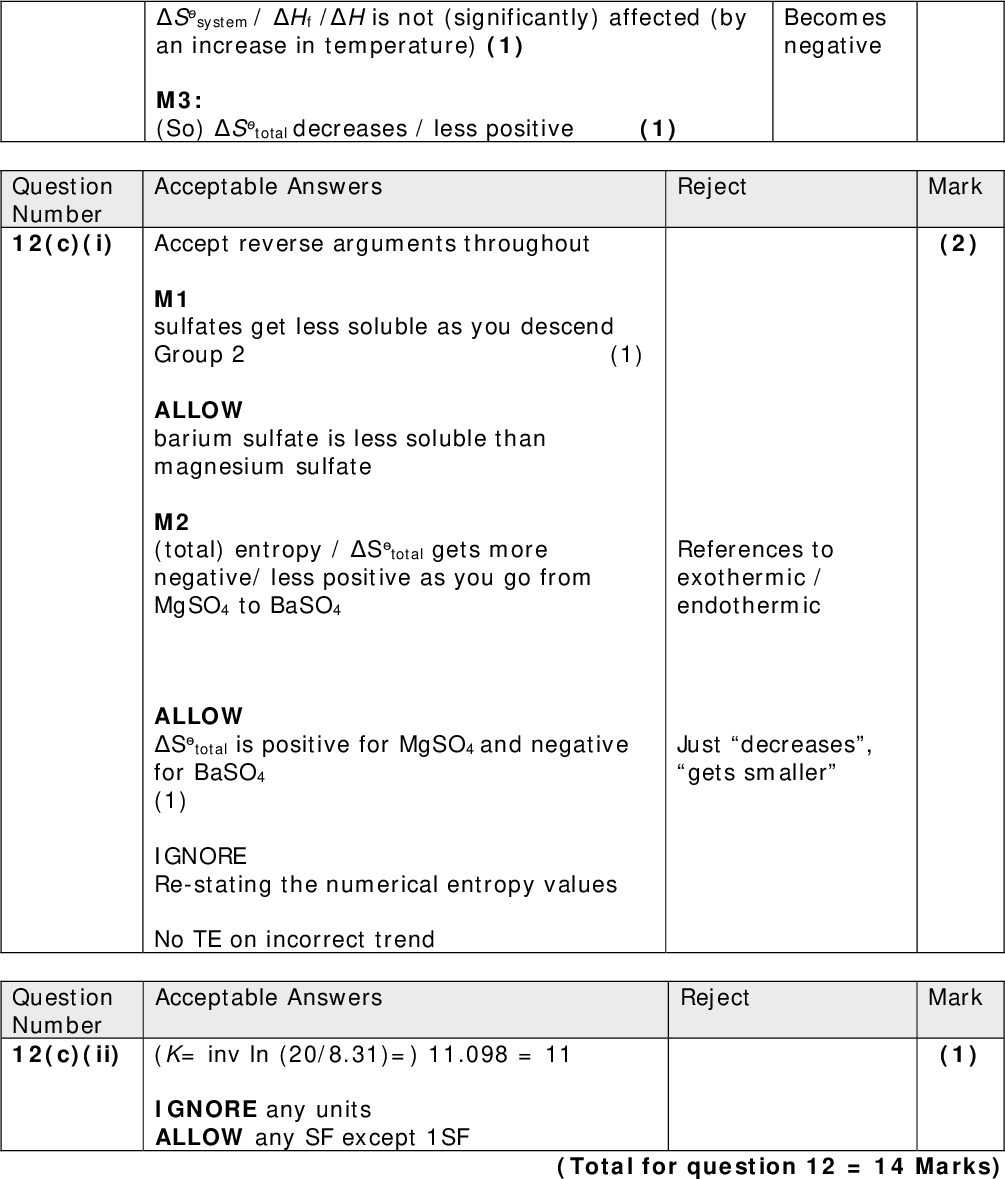
(iv) What would be the effect, if any, of an increase in temperature on the value of total calculated in (b)(iii)? Justify your answer and state any assumptions that (cid:507)S (cid:57) you have made. (3)D O N O T W R I T E I N T H I S A R E A(c) The equations for dissolving two sulfates are shown below. MgSO4(s) + aq (cid:85) Mg2+(aq) + SO4 2(aq) (cid:507)S (cid:57) total = +20 J mol1 K1 BaSO4(s) + aq (cid:85) Ba2+(aq) + SO4 2(aq) (cid:507)S (cid:57) total = 190 J mol1 K1 (i) Compare the values of the total entropy changes for dissolving these two sulfates and show that they are consistent with the trend in the solubility of Group 2 sulfates. (2)18 *P46664A01828* D O N O T W R I T E I N T H I S A R E A D O N O T W R I T E I N T H I S A R E A<br />
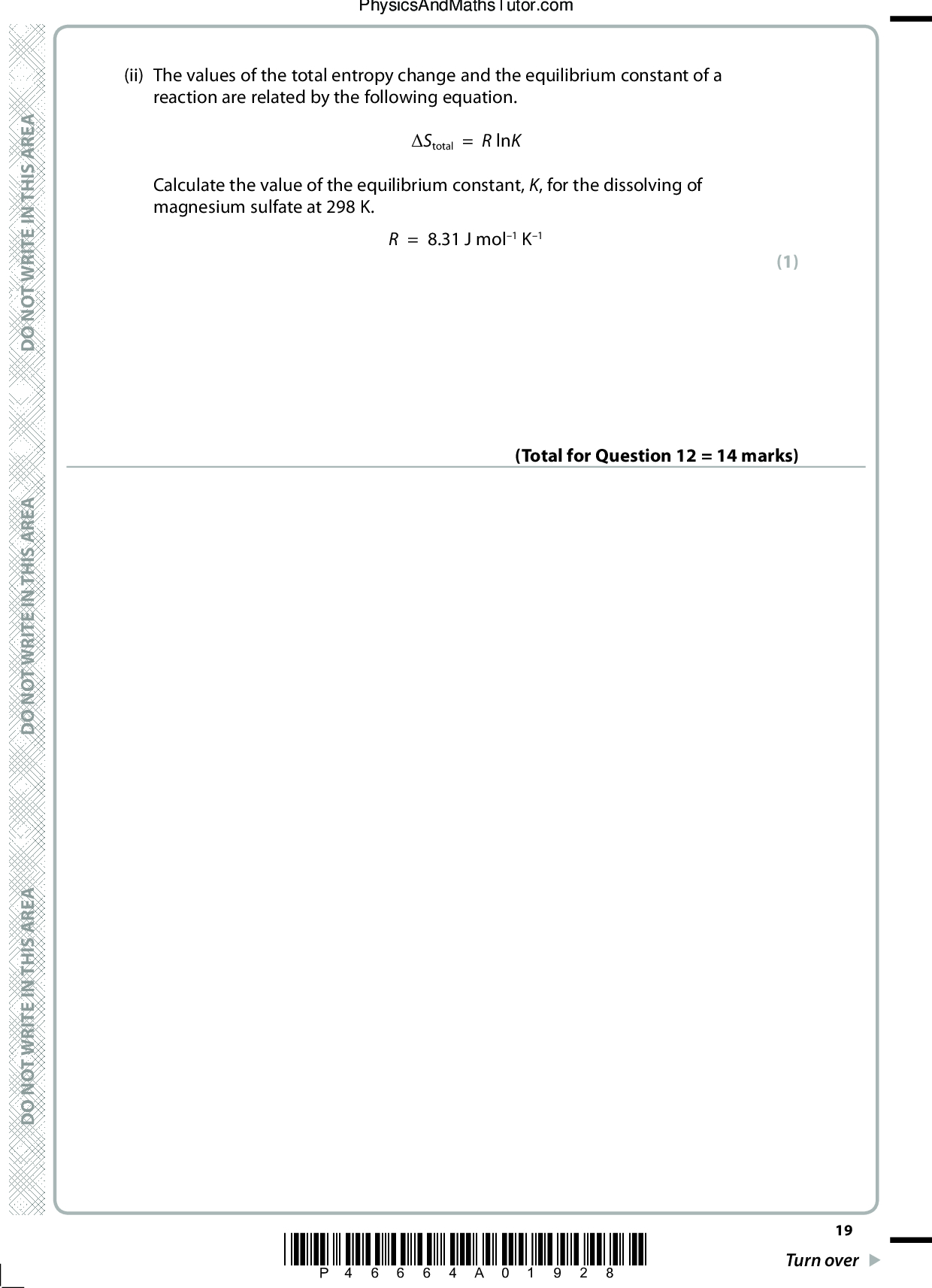
(ii) The values of the total entropy change and the equilibrium constant of a reaction are related by the following equation. (cid:507)Stotal = R lnK Calculate the value of the equilibrium constant, K, for the dissolving of magnesium sulfate at 298 K. R = 8.31 J mol1 K1 (1) A E R A S I H T N I E T I R W T O N O D (Total for Question 12 = 14 marks) A E R A S I H T N I E T I R W T O N O D A E R A S I H T N I E T I R W T O N O D *P46664A01928* 19 Turn over<br />](https://learnah.org/wp-content/uploads/2018/08/l_smalljpgJune_2016_IAL_QP_-_Unit_4_Edexcel_Chemistry_12-0.jpg)