Edexcel Jan 2012 Paper 2 Q21

Answers available below

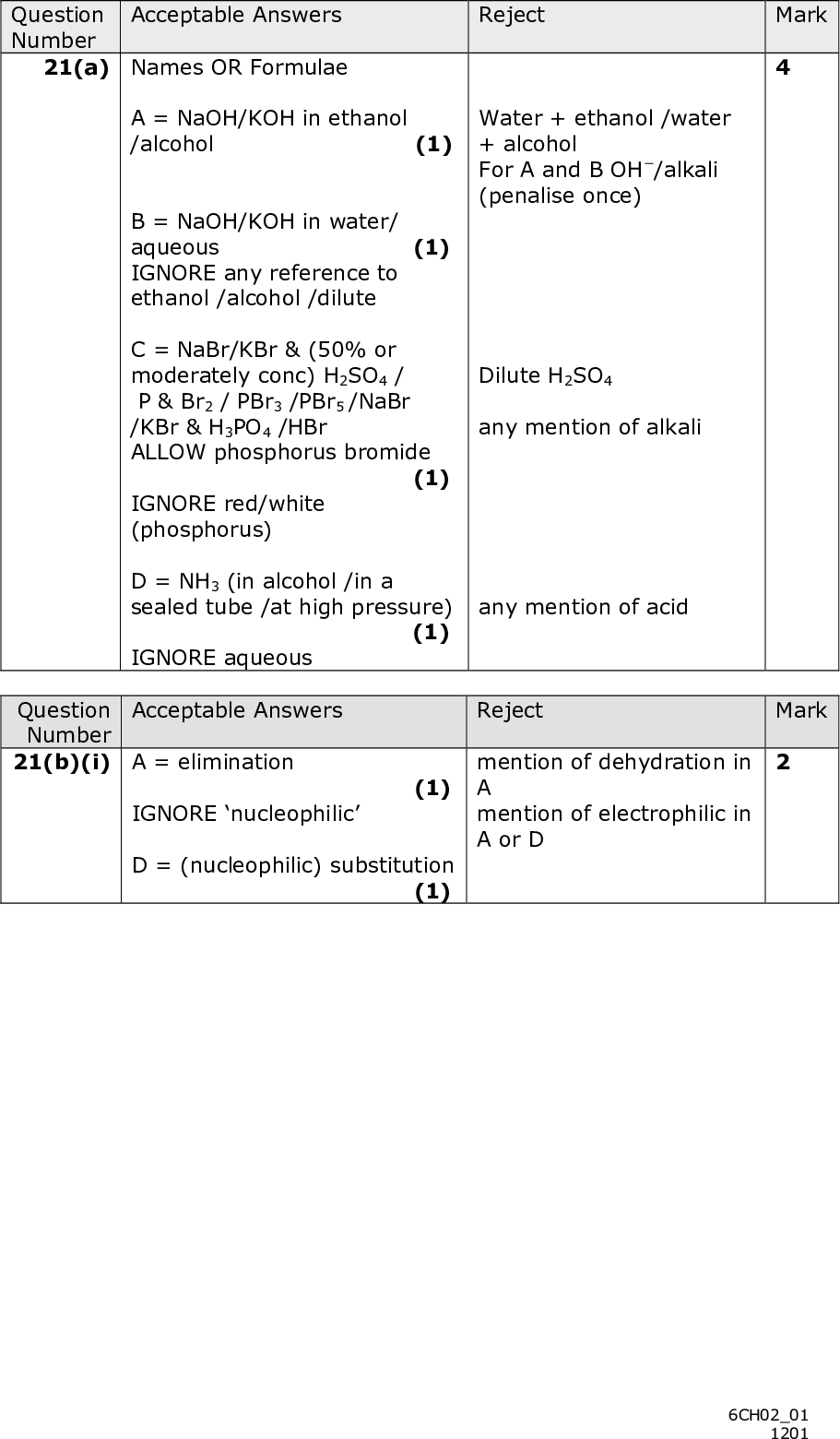
21 Halogenoalkanes are important intermediates in organic chemistry. The scheme below summarises some important reactions of a halogenoalkane. PMT C4H8 C4H9NH2 C4H9Br C4H9OH (a) Identify the reagents and any specific conditions required for the reactions in the diagram. (You may assume that a suitable temperature is maintained in each reaction.) (4) ABCD(b) (i) Classify the type of reaction in each of A and D. (2) AD*P39303A01524* 15 Turn over<br />
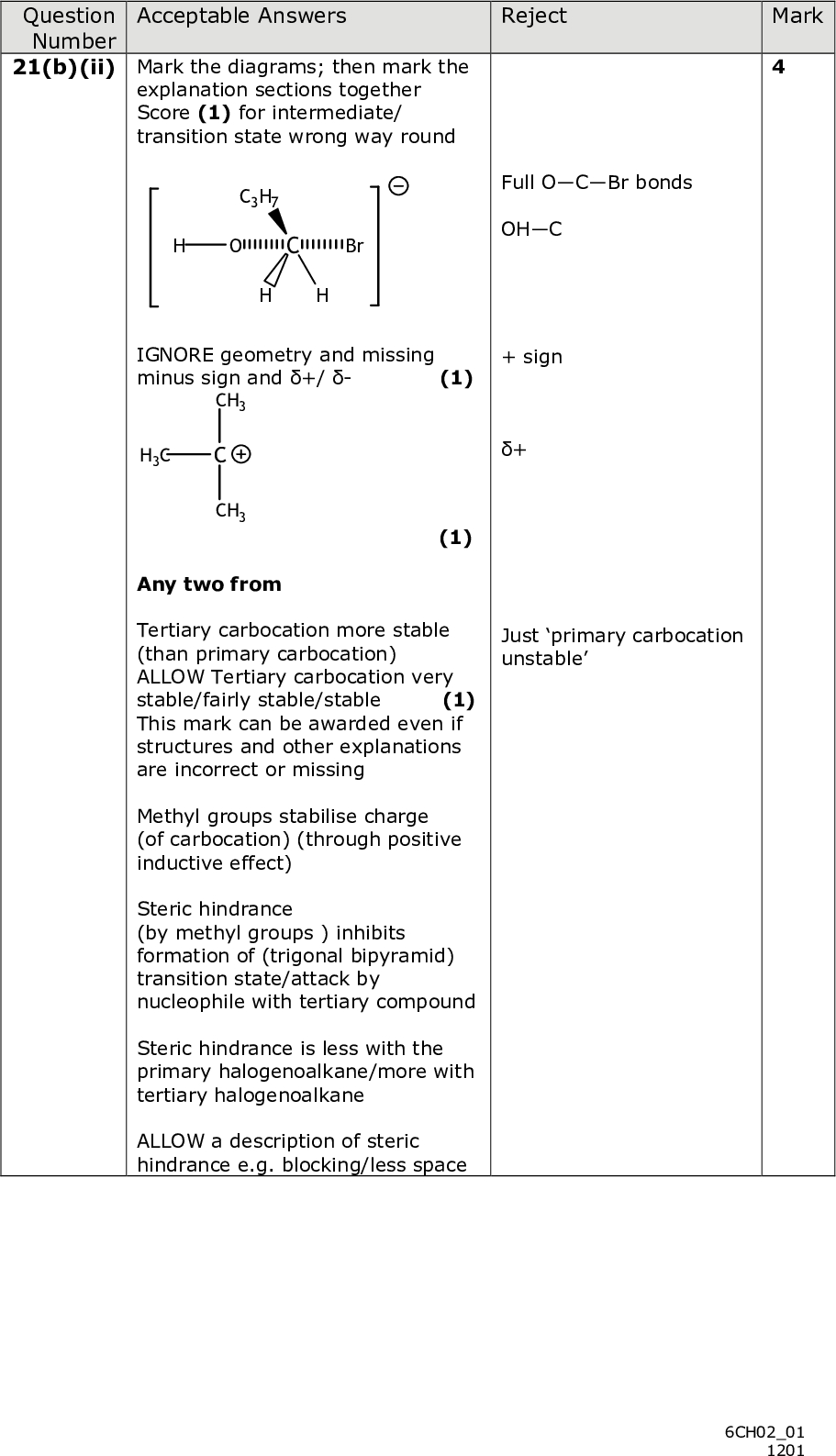
 PMT *(ii) Reaction B can proceed via two possible reaction mechanisms, depending on the structure of the original compound. For each of the two isomers of C4H9Br shown below, draw the structure of the intermediate or transition state which is formed during the reaction. Explain in each case why the specified structure is more favourable. (4) H C C C C Br Intermediate or transition state ExplanationCH3 CH3 C Br CH3 Intermediate or transition state Explanation16 *P39303A01624*<br />
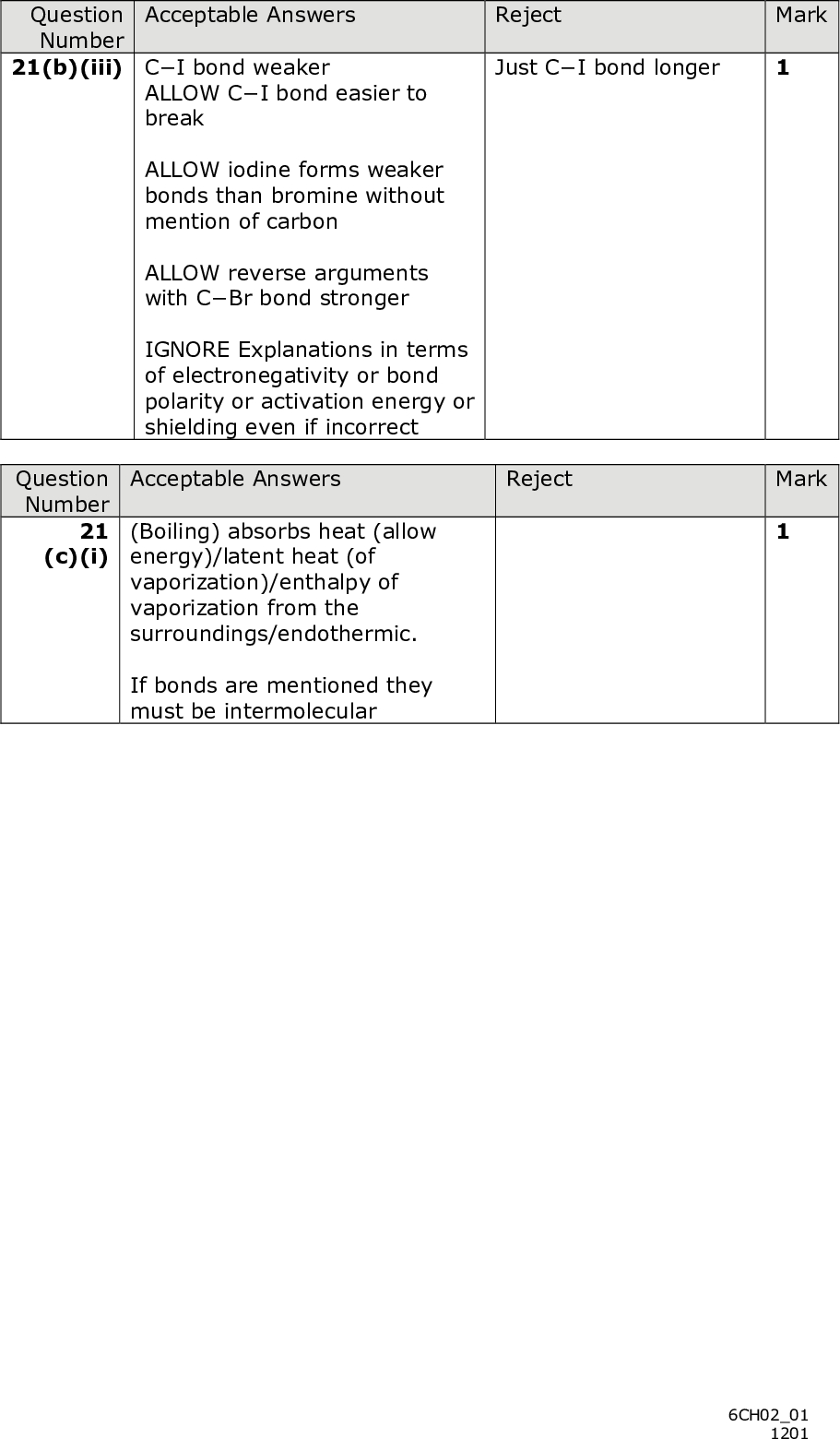
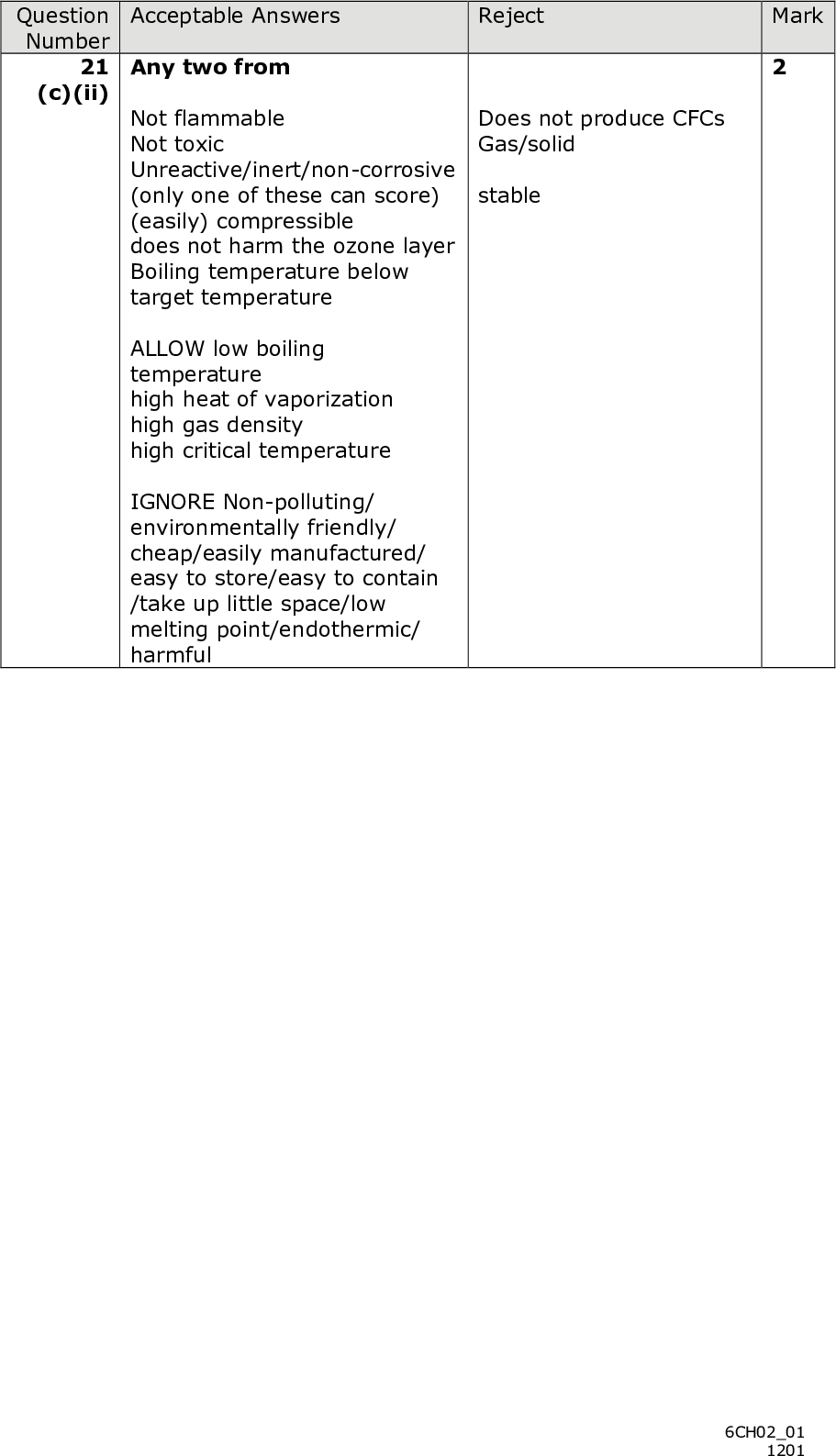
 PMT (iii) If C4H9I is used instead of C4H9Br in reaction D, the rate of formation of C4H9NH2 increases. Explain why the rate of reaction increases. (1)(c) Halogenoalkanes are widely used as refrigerants and belong to the class of refrigerants that cool by change of state (typically by boiling). (i) Suggest how halogenoalkanes cool by change of state. (1)(ii) Suggest two characteristics or properties desirable in a refrigerant. (2) 12(Total for Question 21 = 14 marks) TOTAL FOR SECTION B = 40 MARKS *P39303A01724* 17 Turn over<br />

Show answer