Edexcel Jan 2010 Paper 4 Q21

Answers available below

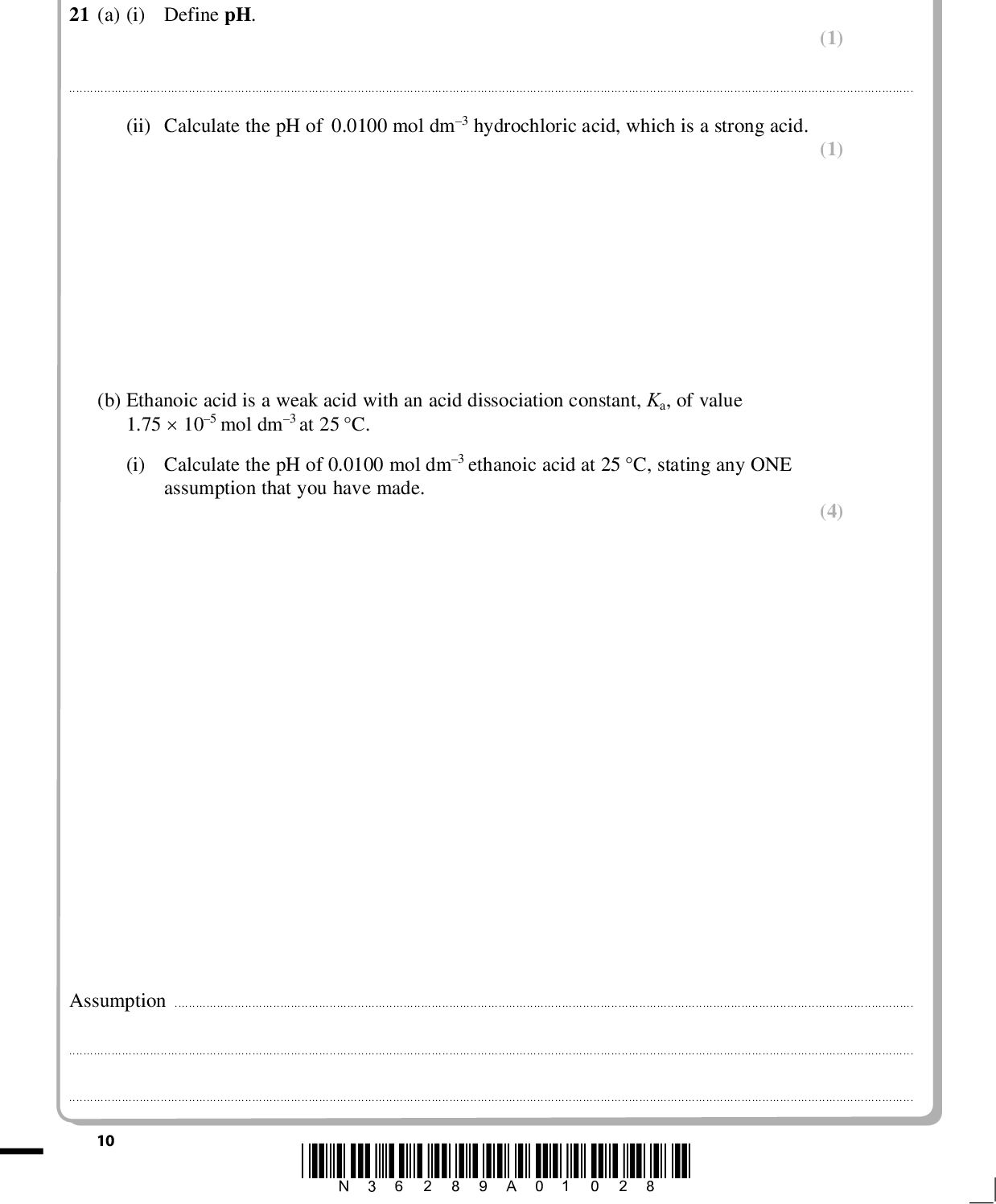
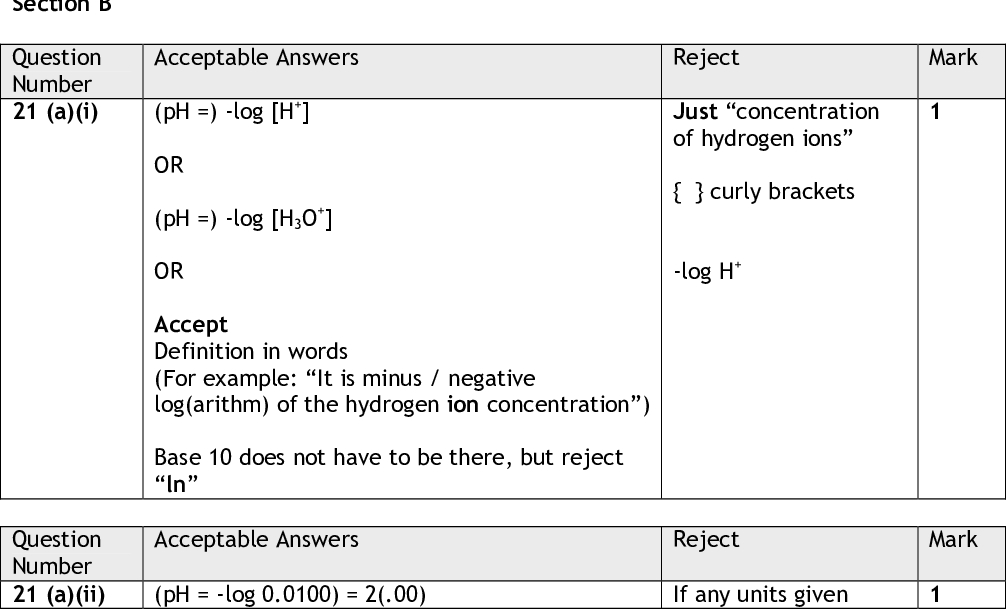
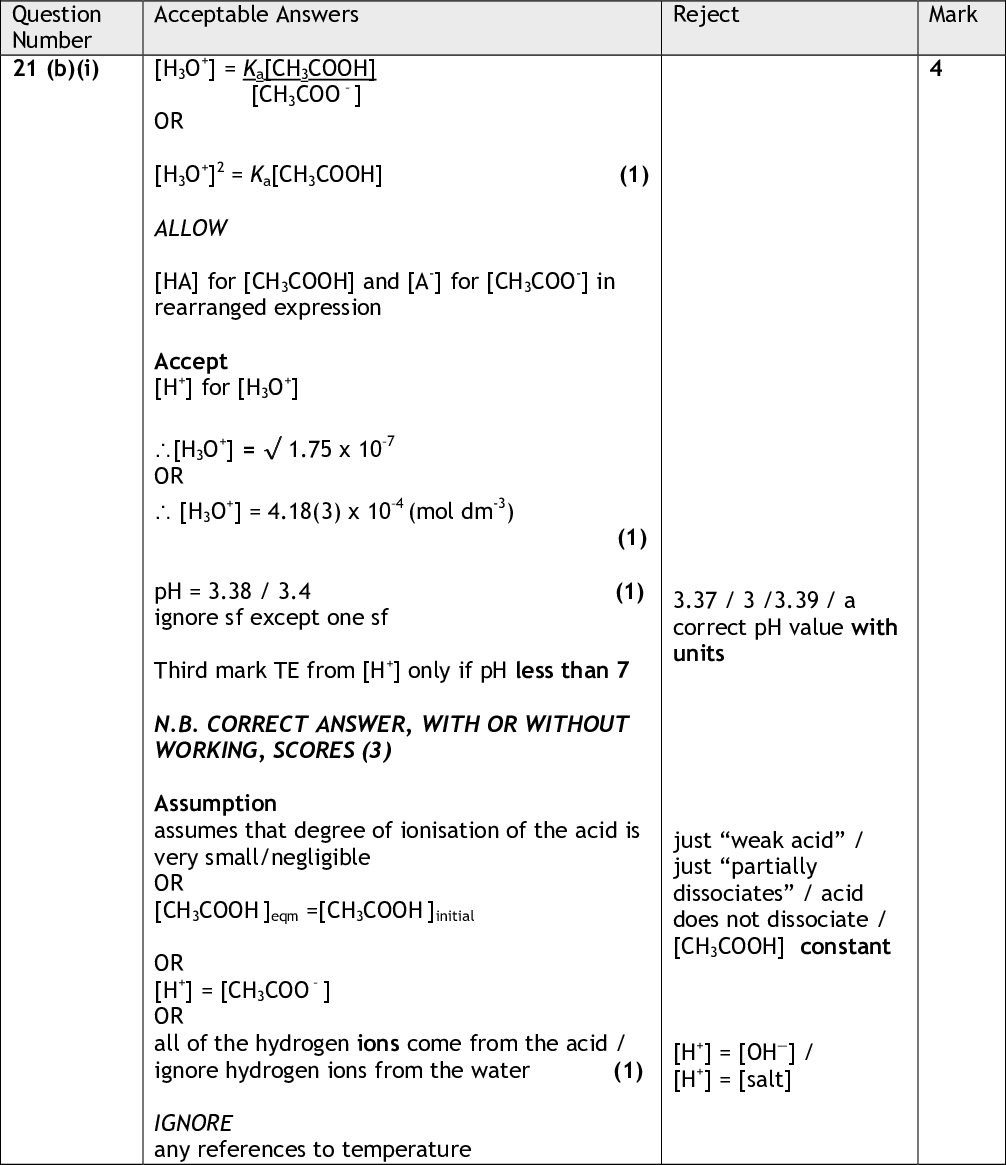
PMT SECTION B Answer ALL the questions. Write your answers in the spaces provided. 21 (a) (i) Define pH. (1)(ii) Calculate the pH of 0.0100 mol dm3 hydrochloric acid, which is a strong acid. (b) Ethanoic acid is a weak acid with an acid dissociation constant, Ka, of value 1.75105 mol dm3 at 25 C. (i) Calculate the pH of 0.0100 mol dm3 ethanoic acid at 25 C, stating any ONE assumption that you have made. (1) (4) Assumption10 *N36289A01028*<br />
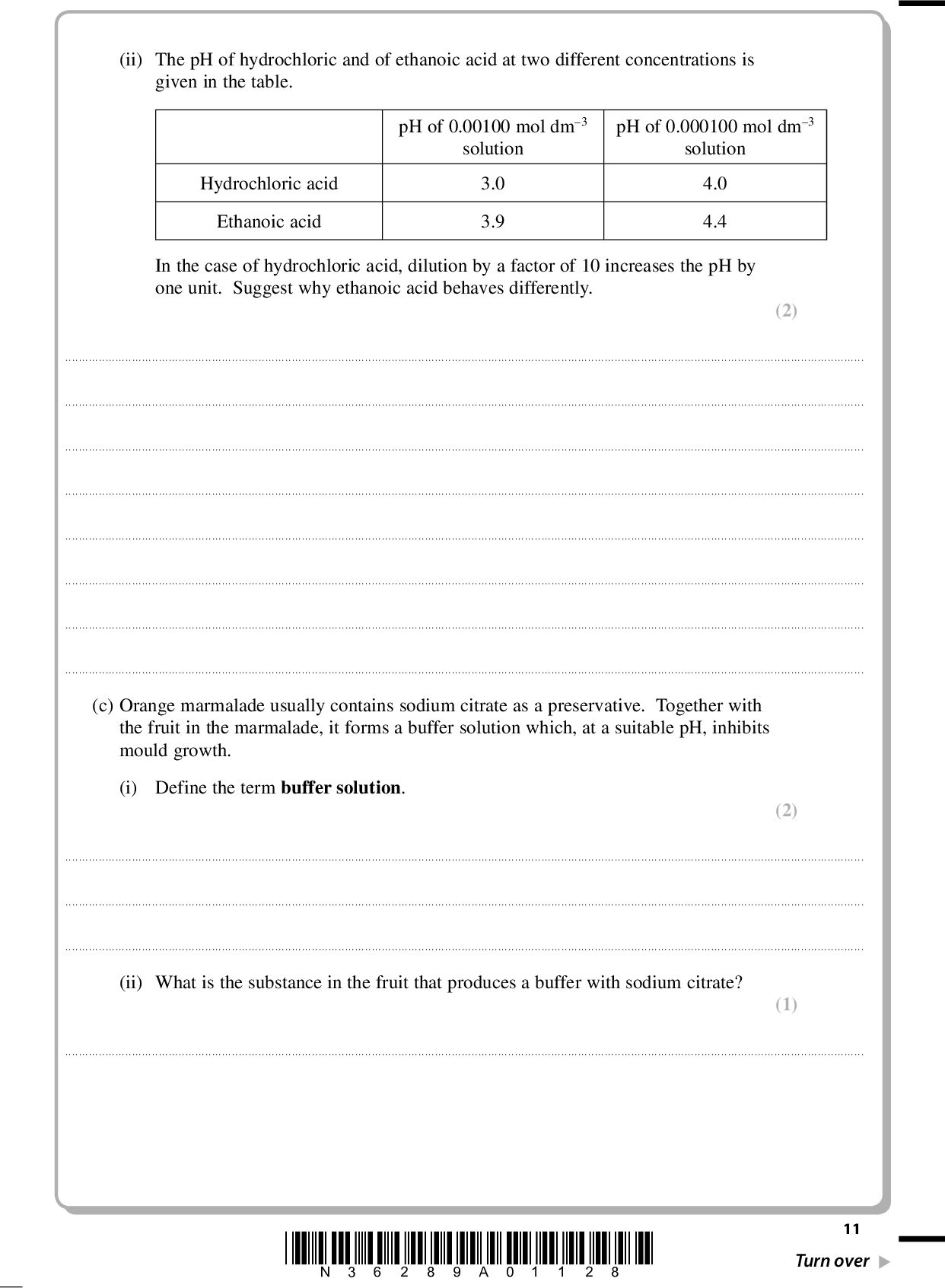
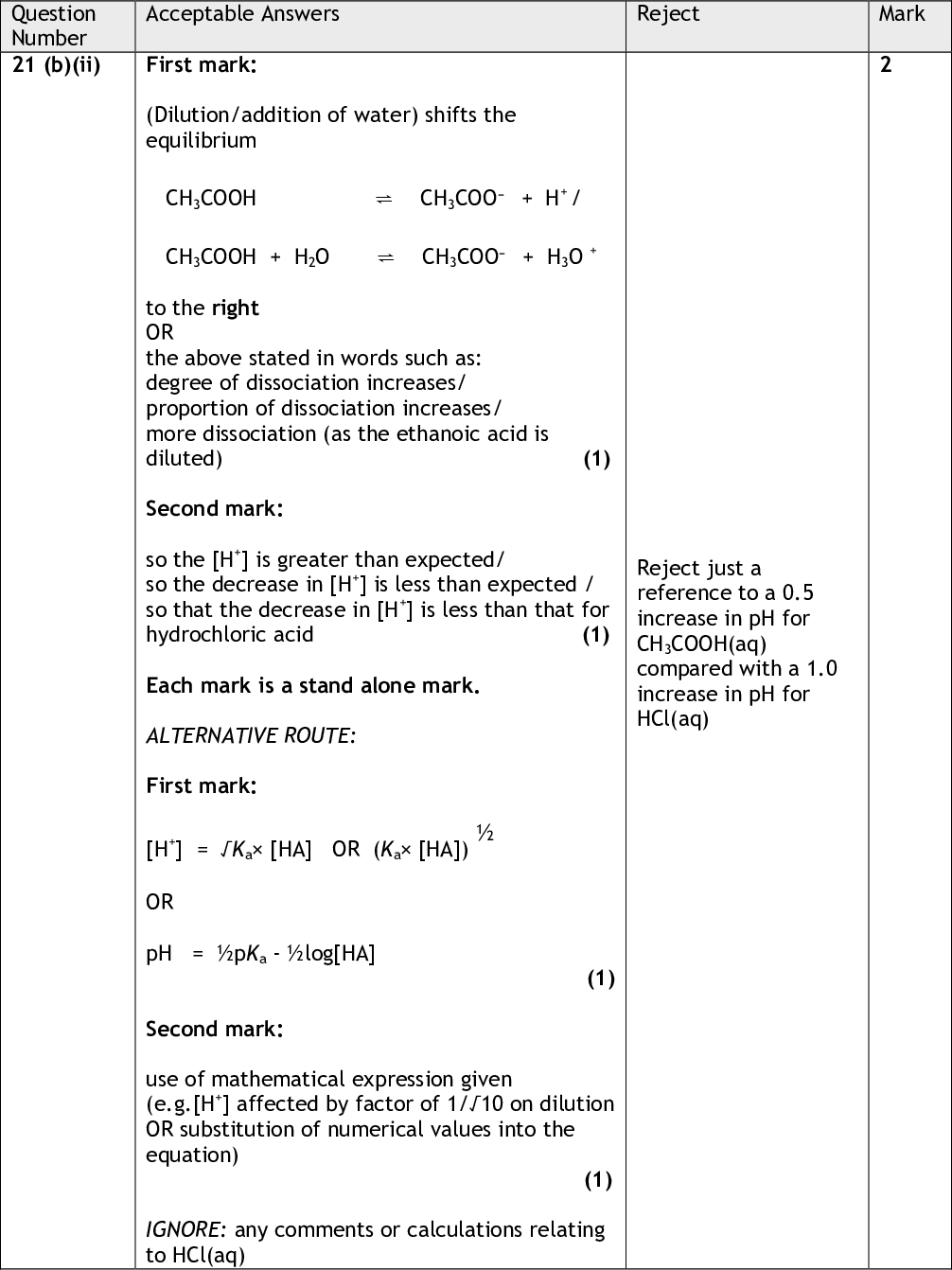
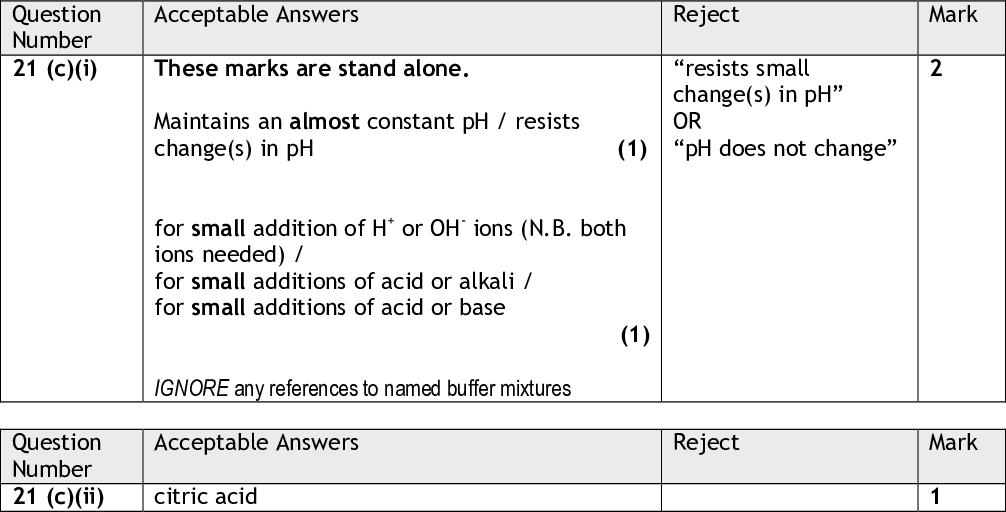
 PMT (ii) The pH of hydrochloric and of ethanoic acid at two different concentrations is given in the table. pH of 0.00100 mol dm3 solution pH of 0.000100 mol dm3 solution Hydrochloric acid Ethanoic acid 3.0 3.9 4.0 4.4 In the case of hydrochloric acid, dilution by a factor of 10 increases the pH by one unit. Suggest why ethanoic acid behaves differently. (2)(c) Orange marmalade usually contains sodium citrate as a preservative. Together with the fruit in the marmalade, it forms a buffer solution which, at a suitable pH, inhibits mould growth. (i) Define the term buffer solution. (2)(ii) What is the substance in the fruit that produces a buffer with sodium citrate? (1)*N36289A01128* 11 Turn over<br />
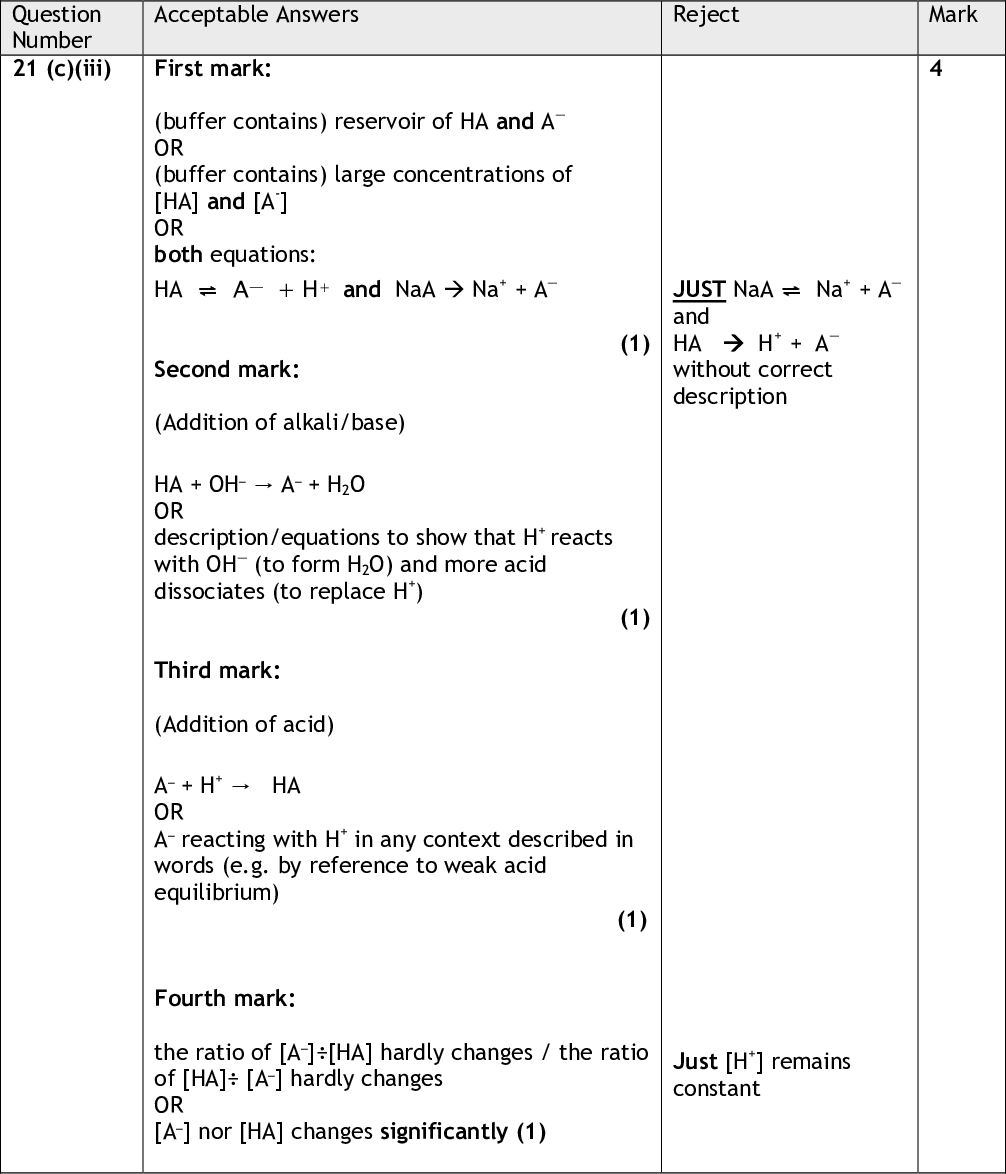
 PMT (iii) Explain how a buffer solution works using this system or any other of your choice. Support your explanation with equations. (4)(Total for Question 21 = 15 marks) 12 *N36289A01228*<br />
 PMT BLANK PAGE *N36289A01328* 13 Turn over<br />

Show answer